Airbus Helicopters H130 / EC130 for Sale

2025 Airbus Helicopters H 130
Contact for Price
helicopter2022 Airbus H130T2
Contact for Price
helicopter
Airbus H130
Contact for Price
Mexico, CDMX
helicopter
2022 Airbus Helicopters H130
€3,500,000
helicopterEurocopter EC-130 B4
Contact for Price
helicopter
2002 Airbus Helicopters EC130 B4
Contact for Price
Ambrì, Switzerland
helicopter
2023 Airbus Helicopters H130 T2
Contact for Price
Ambrì, Switzerland
helicopter
2008 Airbus Eurocopter EC130 B4
Contact for Price
helicopter
Eurocopter EC130
Contact for Price
helicopter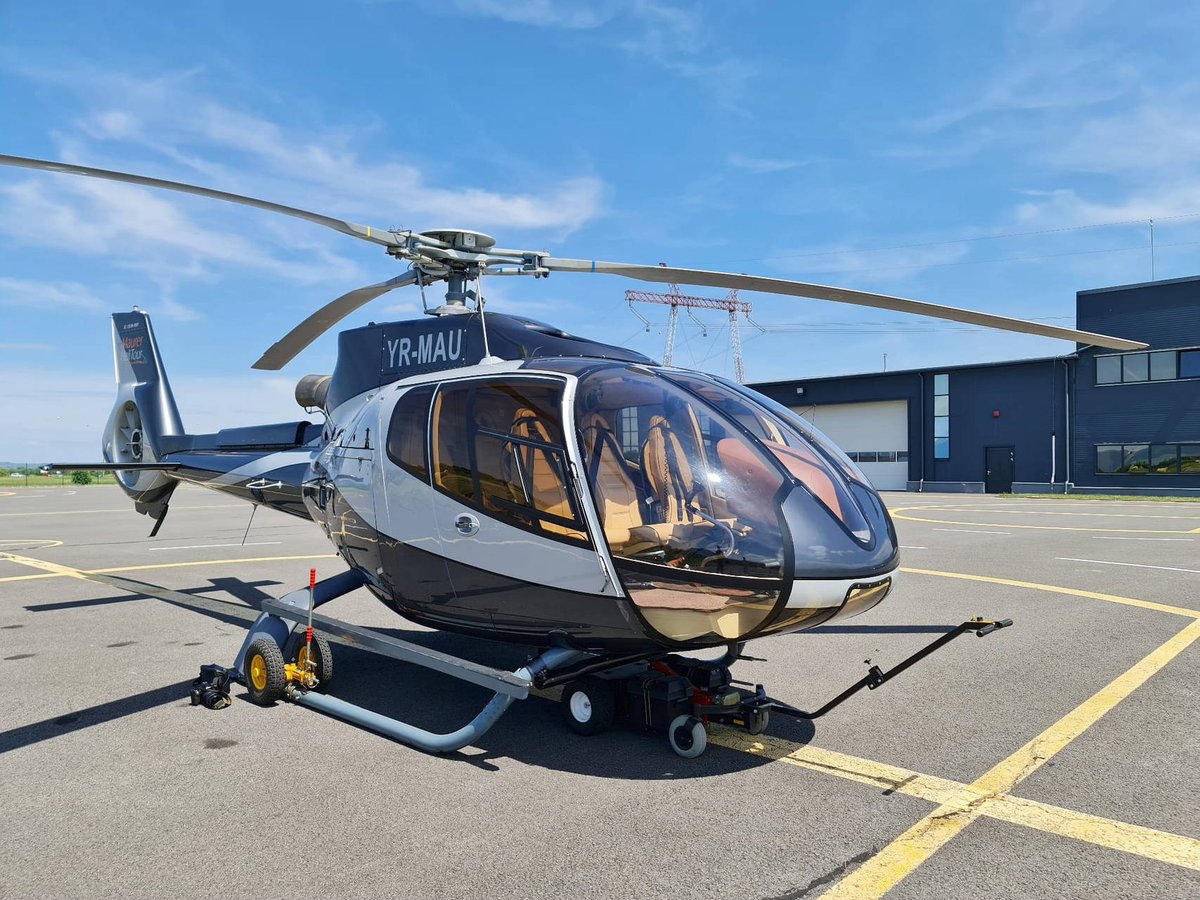
2008 Eurocopter EC130B4
Price on Request
Romania
helicopter
Airbus H130
Contact for Price
United States
helicopter
2005 Eurocopter EC 130 B4
Contact for Price
Brazil
helicopter
Airbus H130
Contact for Price
Kazakhstan
helicopter
Airbus H130T2
Contact for Price
Kazakhstan
helicopterWhat a Airbus Helicopters H130 / EC130 costs, how far it flies, and what it costs to keep
PlaneFox tracks 14 Airbus Helicopters H130 / EC130 aircraft for sale and re-reads every one of them from the broker and dealer sites it watches, so the figures below move when the market moves. Every number on this page is measured from those live listings, not taken from a published price guide.
How far can a Airbus Helicopters H130 / EC130 fly?
A Airbus Helicopters H130 / EC130 flies about 333 nm, roughly 617 km, which is about 2 h 36 min in still air at typical cruise.
What does a Airbus Helicopters H130 / EC130 cost to own?
A Airbus Helicopters H130 / EC130 costs about EUR 19,233 a month to run, or about EUR 1,539 for every flight hour when it is flown 150 hours a year.
More questions about the Airbus Helicopters H130 / EC130
How much does a Airbus Helicopters H130 / EC130 cost?
What is the price range for a used Airbus Helicopters H130 / EC130?
How many Airbus Helicopters H130 / EC130 aircraft are for sale right now?
Where can I find a Airbus Helicopters H130 / EC130 for sale?
What should I check when buying a used Airbus Helicopters H130 / EC130?
About the Airbus Helicopters H130 / EC130
Aircraft overview
The Airbus Helicopters H130 / EC130 is a single engine light helicopter developed from the AS350 Écureuil family, but distinguished by its wider cabin, Fenestron shrouded tail rotor and low external noise profile. The EC130 B4 first flew in 1999 and entered service in the early 2000s. The improved EC130 T2 followed in 2012, and the model was later marketed as the H130 under Airbus Helicopters branding. Its principal roles are air tourism, private and corporate transport, emergency medical services, utility work and law enforcement. For buyers, the type matters because it combines AS350 lineage with a cabin optimized for passengers and forward visibility.
Performance & specifications
Typical cruise speed for the Airbus Helicopters H130 / EC130 is about 120 to 130 knots, depending on variant, equipment and mission fit. Published range is commonly in the 320 to 350 nautical mile class with standard fuel and reserves assumptions. Maximum takeoff weight is about 5,512 lb, with useful load typically in the mid 2,000 lb range, varying significantly by interior, avionics, air conditioning and EMS equipment. Service ceiling is published at up to 23,000 feet. The EC130 B4 uses the Turbomeca, later Safran, Arriel 2B1 turboshaft, while the EC130 T2 and H130 use the more powerful Arriel 2D with dual channel FADEC.
Cabin & avionics
The cabin is a key differentiator. Standard passenger layouts commonly seat a pilot plus six passengers, with high density sightseeing configurations available for up to seven passengers depending on certification and equipment. The flat floor, large transparencies and wide cabin suit tour operations, VIP transport and stretcher capable medical interiors. Avionics are not typically Garmin Perspective or G1000 based. Most aircraft use Airbus VEMD engine and vehicle monitoring, with mission dependent radios, transponders, GPS and navigation equipment from suppliers such as Garmin. Later aircraft may be equipped with options such as autopilot or stability augmentation, including HeliSAS on some installations.
Buying & value
Used market evaluation should separate EC130 B4 from EC130 T2 and H130 examples, since the T2 brought a more powerful engine, revised systems, improved cabin ventilation and numerous detail changes. Key inspection points include engine cycle status, Fenestron condition, dynamic component times, corrosion exposure, tour or utility utilization, and records for Airbus service bulletins and airworthiness directives. Buyers should also review interior configuration, air conditioning, high skid gear, cargo hook provisions, medical equipment and avionics upgrades. In the used market, the Airbus Helicopters H130 / EC130 usually sits above basic utility single engine helicopters when passenger experience, low noise and cabin volume are priorities.