
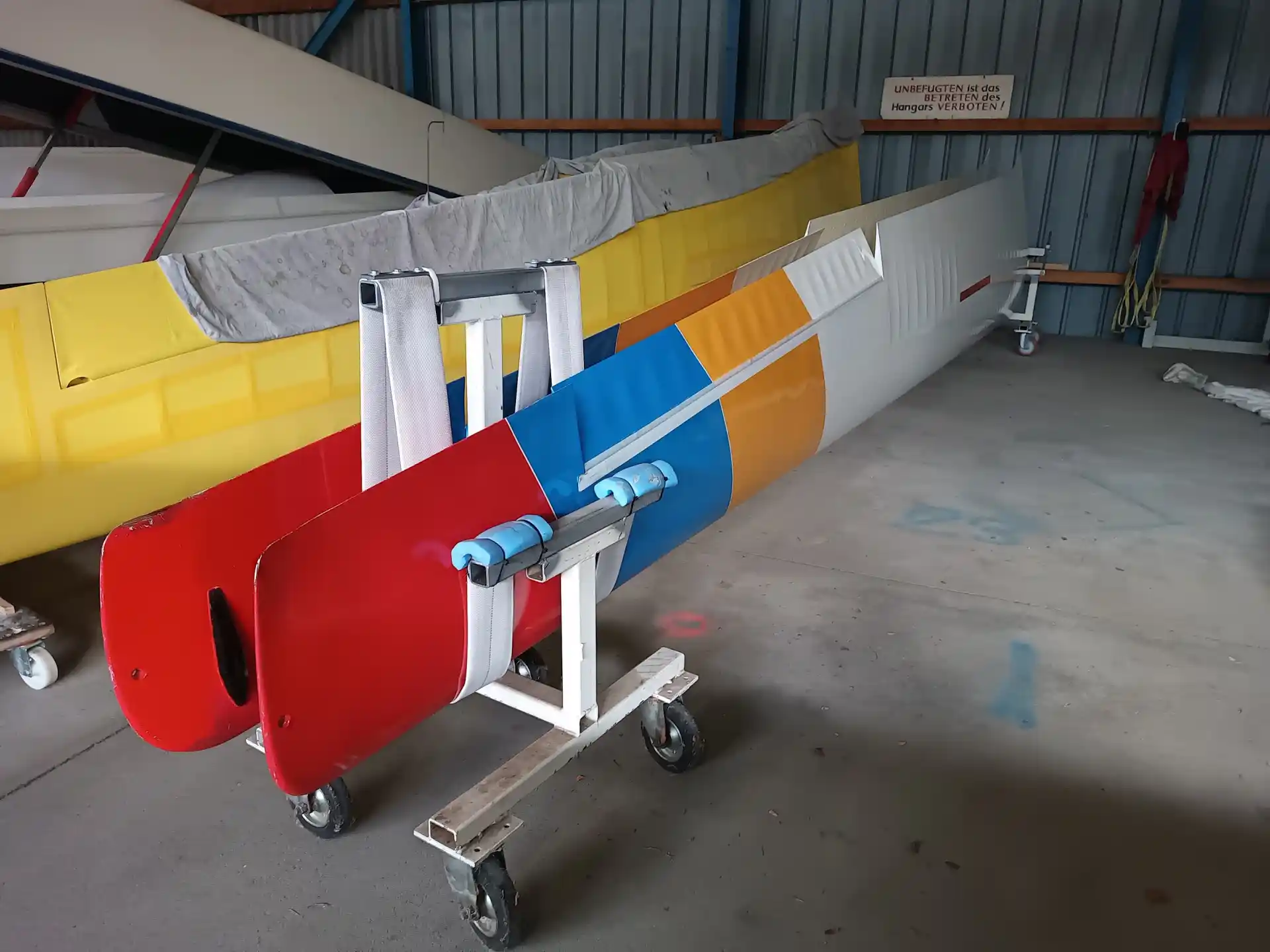
What a Ka 6 costs, how far it flies, and what it costs to keep
PlaneFox tracks 2 Ka 6 aircraft for sale and re-reads every one of them from the broker and dealer sites it watches, so the figures below move when the market moves. Every number on this page is measured from those live listings, not taken from a published price guide.
What does a Alexander Schleicher Ka 6 cost to own?
A Alexander Schleicher Ka 6 costs about EUR 350 a month to run, or about EUR 28 for every flight hour when it is flown 150 hours a year.
More questions about the Ka 6
How much does a Ka 6 cost?
What is the price range for a used Ka 6?
How many Ka 6 aircraft are for sale right now?
Where can I find a Ka 6 for sale?
What should I check when buying a used Ka 6?
About the Alexander Schleicher Ka 6
Aircraft overview
The Alexander Schleicher Ka 6 is a single-seat wooden sailplane designed by Rudolf Kaiser and built by Alexander Schleicher in Germany. The type first flew in the mid 1950s and remained in production through the 1960s, with several refined variants. It was created for club and competition soaring at a time when high-quality wood construction still defined much of the glider market. The Ka 6 matters because it became one of the benchmark Standard Class and club sailplanes of its era, combining manageable handling with credible cross-country performance. It should not be confused with the two-seat Ka 7 or later fiberglass Schleicher designs.
Performance & specifications
The Ka 6 is a pure glider, so it has no powerplant, fuel system or powered cruise figure. Typical operating speeds depend on variant, loading and conditions, but pilots commonly fly between thermals at moderate glider speeds rather than at a fixed cruise speed. Published performance varies by version: early Ka 6 models are commonly cited around a 29:1 glide ratio, while the later Ka 6E is generally associated with a glide ratio around 34:1. Range is therefore not a fixed aircraft specification, but a function of soaring weather, pilot skill and outlanding options. Maximum all-up weight is typically around 660 lb for many Ka 6 versions, leaving a useful load in the region of a single pilot plus installed equipment. Certified ceiling is not normally treated like a powered aircraft figure for this type.
Cabin & avionics
The cockpit is a compact single-seat glider cockpit with a clear canopy, conventional stick and rudder controls, airbrakes and a simple instrument panel. Buyers should expect period-correct analog instruments rather than integrated avionics such as Garmin Perspective or G1000. Typical equipment includes an airspeed indicator, altimeter, magnetic compass, mechanical or electronic variometer, radio and, in many modernized examples, FLARM or similar traffic awareness equipment. Some aircraft may also have a transponder, logger or updated battery and wiring installation depending on local airspace needs.
Buying & value
Used Ka 6 aircraft are best evaluated as vintage wooden sailplanes. Condition and documentation usually matter more than cosmetic appearance. Key inspection areas include the wooden wing and fuselage structure, glue joints, moisture history, fabric covering, control linkages, airbrake operation, canopy condition, rigging hardware and trailer condition. Important variants include the Ka 6, Ka 6B, Ka 6BR, Ka 6CR and Ka 6E, with later versions generally offering refinement and improved performance. In the used market, the Alexander Schleicher Ka 6 usually sits as an accessible classic soaring aircraft rather than a modern competition machine, attractive to buyers who value low operating complexity and are prepared for specialist wood aircraft maintenance.