Aquila A210 for Sale
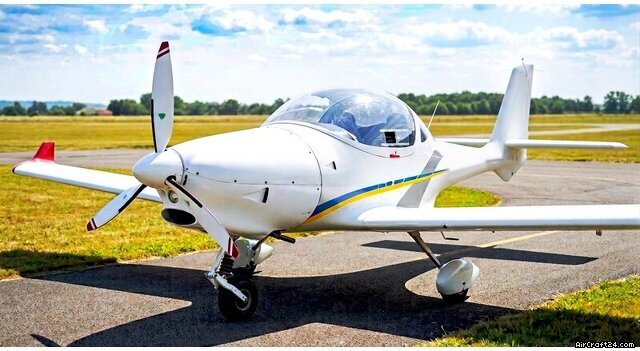
What a Aquila A210 costs, how far it flies, and what it costs to keep
PlaneFox tracks 2 Aquila A210 aircraft for sale and re-reads every one of them from the broker and dealer sites it watches, so the figures below move when the market moves. Every number on this page is measured from those live listings, not taken from a published price guide.
How far can a Aquila A210 fly?
A Aquila A210 flies about 620 nm, roughly 1,148 km, which is about 4 h 46 min in still air at typical cruise.
What does a Aquila A210 cost to own?
A Aquila A210 costs about EUR 1,330 a month to run, or about EUR 132 for every flight hour when it is flown 150 hours a year.
More questions about the Aquila A210
How much does a Aquila A210 cost?
What is the price range for a used Aquila A210?
How many Aquila A210 aircraft are for sale right now?
Where can I find a Aquila A210 for sale?
What should I check when buying a used Aquila A210?
About the Aquila A210
Aircraft overview
The Aquila A210 is a German two seat light aircraft developed by Aquila Technische Entwicklungen, later Aquila Aviation, for training, touring and private ownership. The type first flew in 2000 and entered production in the early 2000s. It is a composite, low wing aircraft with fixed tricycle landing gear and a constant focus on efficient operation under European very light aircraft certification. For buyers, the A210 matters because it offers modern composite construction, benign handling and low fuel burn in a certified aircraft, while remaining distinct from later Aquila A211 and A211GX models.
Performance & specifications
Typical Aquila A210 performance is built around economy rather than high speed. Cruise speed is commonly around 110 knots, depending on power setting, propeller, loading and equipment fit. Published range is commonly in the region of 600 nautical miles with reserves, making it suitable for regional touring as well as training use. The aircraft has a maximum takeoff weight of 750 kg, about 1,653 lb, with useful load varying by individual equipment and empty weight. Service ceiling is typically quoted at about 14,000 feet. Power comes from a Rotax 912 S3, a 100 hp, four cylinder, liquid and air cooled engine, usually driving a constant speed propeller on certified examples.
Cabin & avionics
The A210 has two side by side seats under a large forward hinged canopy, with good outside visibility and a compact baggage area behind the seats. Cabin width and payload should be checked against the intended mission, as with any two seat European trainer. Most A210 aircraft were delivered with conventional analogue flight instruments rather than integrated glass cockpits. Typical avionics may include Becker or BendixKing communication and navigation equipment, a transponder, intercom, GPS such as a Garmin GNS series unit, and later radio or Mode S upgrades. Garmin G1000 or Garmin Perspective installations are not typical identifying features of the A210.
Buying & value
On the used market, the Aquila A210 is usually positioned as an economical certified trainer and private touring aircraft, priced below newer glass cockpit Aquila variants. Buyers should verify airframe hours, training history, canopy condition, landing gear condition, composite repairs, propeller status, engine hours and Rotax maintenance compliance. Documentation quality is important, especially for service bulletins, weight and balance records, avionics changes and any damage repair. Useful upgrades may include modern 8.33 kHz radios, Mode S or ADS-B compatible transponders, updated GPS navigation and refreshed interior trim. The main comparison points are operating cost, remaining engine life, avionics standard and whether the aircraft is an A210 rather than a later A211 derivative.