Bucker BU-131 Jungmann for Sale
Bücker Bü-131 Jungmann project
€60,000
EPRZ, Poland
single-engineBücker Jungmann UL
Contact for Price
single-engine
CASA Bücker Jungmann 1.131E-2000
Contact for Price
Switzerland
single-engine
2020 Bücker 131 Jungmann
Contact for Price
single-engine1951 Bücker Bü-131 Jungmann
£75,000
Enstone, England
single-engineBücker FK-131 Jungmann UL
€97,000
LF3759, France
single-engineBücker Bü-131 Jungmann project
CHF 69,000
LSPL, Switzerland
single-engineBücker Bü-131 Jungmann CASA 1.131E
€80,000
Castellon de la Plana, Spain
single-engine
Bucker Jungmann 1.131-E Serie 2000
$187,624
Switzerland, Fehraltdorf, LSZK
single-engineBücker Bü-131 Jungmann project
€49,000
LEAX, Spain
single-engine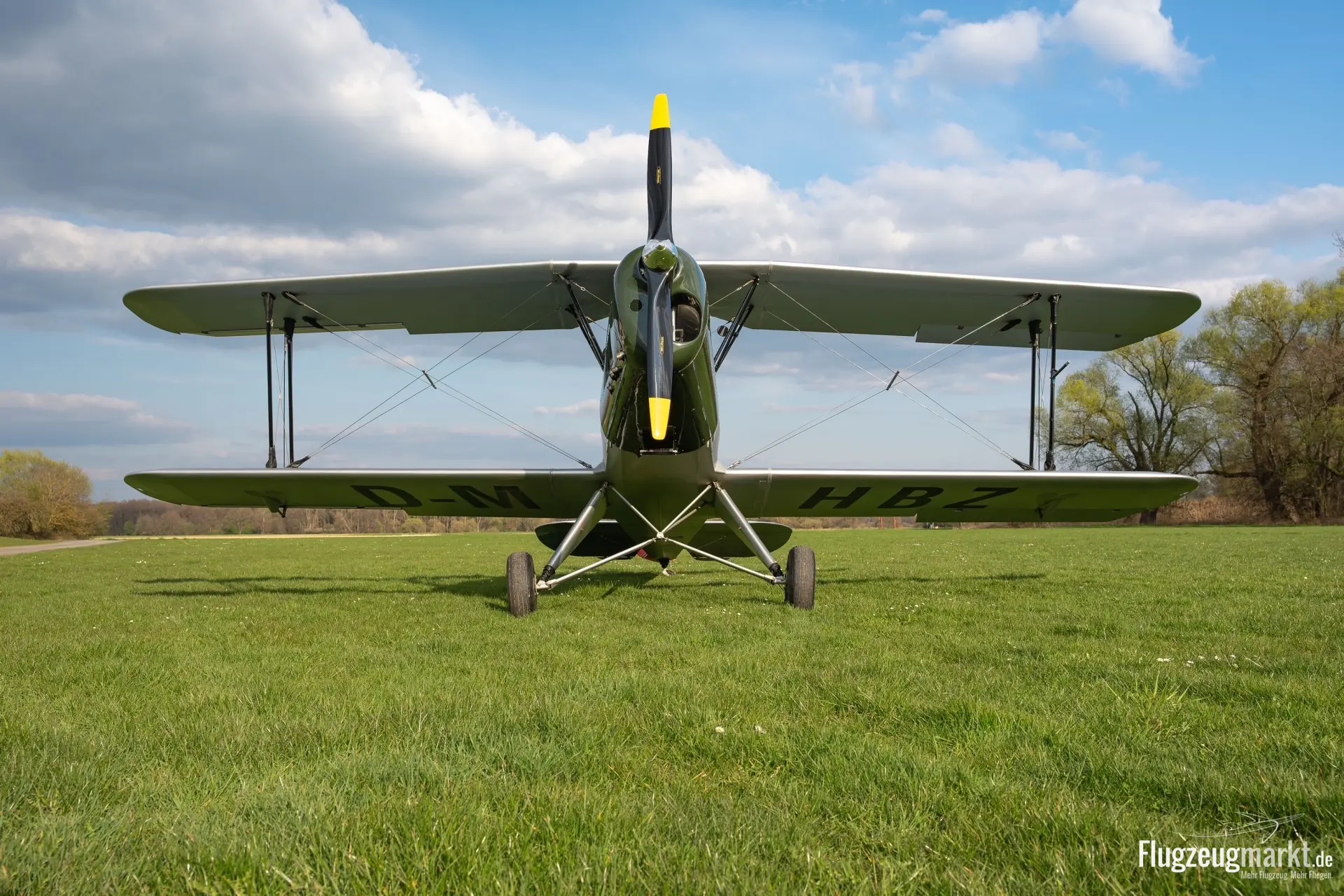
Bücker & Funk FK 131 Jungmann
€85,000
Langenselbold (DE)
single-engine
Bücker Bü 131 Jungmann
€119,000
single-engine1939 Bücker Flugzeugbau Jungmann
€125,000
Bleienbach, Schweiz
single-engineWhat a Bucker BU-131 Jungmann costs, how far it flies, and what it costs to keep
PlaneFox tracks 13 Bucker BU-131 Jungmann aircraft for sale and re-reads every one of them from the broker and dealer sites it watches, so the figures below move when the market moves. Every number on this page is measured from those live listings, not taken from a published price guide.
How much does a Bucker BU-131 Jungmann cost?
There are 13 Bucker BU-131 Jungmann listings on PlaneFox right now, 10 of them priced. They ask between EUR 49,000 and EUR 168,000, with a median of EUR 87,000.
How far can a Bucker BU-131 Jungmann fly?
A Bucker BU-131 Jungmann flies about 351 nm, roughly 650 km, which is about 3 h 49 min in still air at typical cruise.
What does a Bucker BU-131 Jungmann cost to own?
A Bucker BU-131 Jungmann costs about EUR 2,568 a month to own and fly: EUR 1,922 to run it, plus EUR 646 for a loan over 15 years on the median asking price here, EUR 87,288. Flown 150 hours a year, that is about EUR 204 for every flight hour.
More questions about the Bucker BU-131 Jungmann
How much does a Bucker BU-131 Jungmann cost?
What is the price range for a used Bucker BU-131 Jungmann?
How many Bucker BU-131 Jungmann aircraft are for sale right now?
Where can I find a Bucker BU-131 Jungmann for sale?
What should I check when buying a used Bucker BU-131 Jungmann?
How do Bucker BU-131 Jungmann prices change with year of manufacture?
About the Bucker BU-131 Jungmann
Aircraft overview
The Bucker BU-131 Jungmann is a two seat, single engine biplane designed in Germany by Bücker Flugzeugbau as a primary trainer and light aerobatic aircraft. It first flew in 1934 and entered production before the Second World War, with licensed production continuing in countries including Switzerland, Spain and Japan. Its importance comes from its role as one of the defining European training biplanes of the 1930s and 1940s, valued for light controls, benign handling and genuine vintage character. Surviving examples today are typically operated as historic sport aircraft, display aircraft and advanced tailwheel trainers.
Performance & specifications
Typical performance depends strongly on engine fit, propeller, airframe condition and whether the aircraft is an original German built machine, a licensed version or a later restoration. A standard Bucker BU-131 Jungmann with the Hirth HM 504 series inverted four cylinder engine is commonly associated with about 105 hp. Typical cruise speed is around 85 to 95 knots, with a maximum speed a little above 110 knots. Published range is commonly in the region of 350 nautical miles, while service ceiling is generally quoted at about 13,000 feet. Maximum takeoff weight is around 1,500 lb, giving a useful load of roughly 600 lb on many examples. Buyers should verify the exact weight and balance sheet for the individual aircraft, especially where modern radios, starters, electrical systems or engine conversions have been installed.
Cabin & avionics
The Bucker BU-131 Jungmann has two open cockpits in tandem, with the student or passenger usually in the front seat and the pilot in the rear. It is a fabric covered, wire braced biplane with fixed conventional landing gear, so cockpit access, wind exposure and ground handling are part of the ownership experience. Avionics are normally simple VFR installations: basic flight instruments, engine gauges, a radio, transponder and sometimes a portable GPS or compact panel navigator. Integrated glass suites such as Garmin Perspective or Garmin G1000 are not typical or appropriate for this aircraft category.
Buying & value
Condition, documentation and originality drive Bucker BU-131 Jungmann values. Important checks include fabric age and quality, wing and fuselage structure, corrosion control, landing gear condition, engine supportability and the completeness of logbooks. Common market distinctions include original Bücker built aircraft, Swiss Dornier built Bu 131 variants, Spanish CASA 1.131 examples and aircraft with non original engines. Some aircraft have modern electrical systems or radios, while others are kept closer to period specification. Current PlaneFox used market data shows an average asking price of about EUR 92,000, with observed listings from roughly EUR 49,000 to EUR 162,000, placing the type in the specialist vintage and warbird trainer segment rather than the mainstream light sport market.