De Havilland DHC-6 Twin Otter for Sale
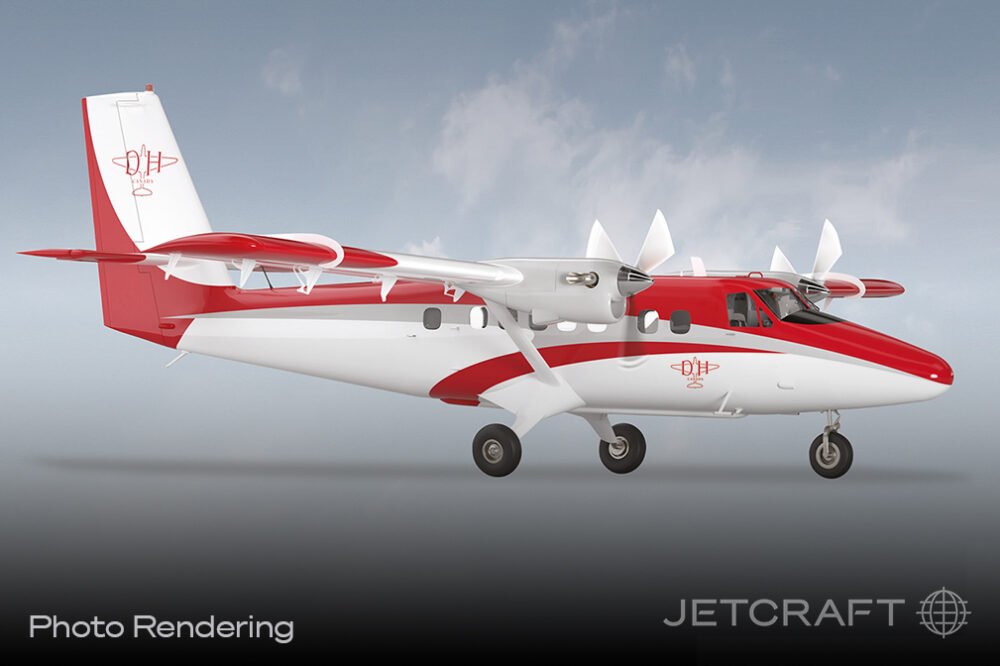
What a De Havilland DHC-6 Twin Otter costs, how far it flies, and what it costs to keep
PlaneFox tracks 2 De Havilland DHC-6 Twin Otter aircraft for sale and re-reads every one of them from the broker and dealer sites it watches, so the figures below move when the market moves. Every number on this page is measured from those live listings, not taken from a published price guide.
How far can a De Havilland DHC-6 Twin Otter fly?
A De Havilland DHC-6 Twin Otter flies about 871 nm, roughly 1,613 km, which is about 4 h 47 min in still air at typical cruise.
More questions about the De Havilland DHC-6 Twin Otter
How much does a De Havilland DHC-6 Twin Otter cost?
What is the price range for a used De Havilland DHC-6 Twin Otter?
How many De Havilland DHC-6 Twin Otter aircraft are for sale right now?
Where can I find a De Havilland DHC-6 Twin Otter for sale?
What should I check when buying a used De Havilland DHC-6 Twin Otter?
About the De Havilland DHC-6 Twin Otter
Aircraft overview
The De Havilland DHC-6 Twin Otter is a twin engine turboprop utility aircraft developed by de Havilland Canada. It first flew in 1965, with original production running from 1965 to 1988, followed by modern Series 400 production under Viking Air and later De Havilland Canada. Designed as a short takeoff and landing aircraft, it serves commuter airline, charter, cargo, medevac, parachute, survey, floatplane and remote access roles. Its value in the market comes from a rare combination of twin engine redundancy, fixed landing gear simplicity, high wing loading access and proven operation from short, rough, snow, water or unimproved strips.
Performance & specifications
Typical cruise speed is about 150 to 170 knots, depending on variant, loading, floats and mission equipment. Range is commonly in the 700 to 800 nautical mile class in standard landplane configuration, with practical mission range varying significantly by payload and reserves. The aircraft has a maximum takeoff weight of 12,500 lb on many Series 300 and Series 400 examples, with useful load often around the mid 4,000 lb range depending on equipment. Published service ceiling is up to 25,000 feet. Most Series 300 aircraft use two Pratt & Whitney Canada PT6A-27 turboprops rated at 620 shp each. Series 400 aircraft use PT6A-34 engines, flat rated for the Twin Otter installation.
Cabin & avionics
The standard commuter layout seats up to 19 passengers, with alternative interiors for cargo, combi, medevac, VIP transport, parachute operations and special missions. The cabin is practical rather than luxurious, with a wide rear cargo door on many aircraft and a flat floor that supports quick role changes. Avionics vary widely. Older aircraft may retain analog instruments with GPS, transponder and radio upgrades, while many used examples have Garmin GTN or GNS navigators, Garmin G600 class displays, autopilot updates or mission equipment. The Series 400 introduced a modern Honeywell Primus Apex integrated flight deck.
Buying & value
Used DHC-6 Twin Otter buyers should focus on airframe history, corrosion exposure, float or saltwater operation, landing gear and wing structure condition, engine times, propeller status, maintenance records and compliance with service bulletins. Common variants include the Series 100, Series 200, Series 300 and Series 400, with the Series 300 widely represented in commercial service. Upgrades may include Wipline or Aerocet floats, ski or tundra gear, avionics modernization, cargo interiors and performance or mission kits. In the used market, the aircraft typically sits above single engine utility turboprops in capability and operating cost, and below larger regional turboprops in capacity.