Glasair GlaStar for Sale
What a Glasair GlaStar costs, how far it flies, and what it costs to keep
PlaneFox tracks 2 Glasair GlaStar aircraft for sale and re-reads every one of them from the broker and dealer sites it watches, so the figures below move when the market moves. Every number on this page is measured from those live listings, not taken from a published price guide.
How far can a Glasair GlaStar fly?
A Glasair GlaStar flies about 520 nm, roughly 963 km, which is about 3 h 43 min in still air at typical cruise.
What does a Glasair GlaStar cost to own?
A Glasair GlaStar costs about EUR 1,516 a month to run, or about EUR 158 for every flight hour when it is flown 150 hours a year.
More questions about the Glasair GlaStar
How much does a Glasair GlaStar cost?
What is the price range for a used Glasair GlaStar?
How many Glasair GlaStar aircraft are for sale right now?
Where can I find a Glasair GlaStar for sale?
What should I check when buying a used Glasair GlaStar?
About the Glasair GlaStar
Aircraft overview
The Glasair GlaStar is a two-seat, high-wing, kit-built light aircraft developed by Stoddard-Hamilton Aircraft in the 1990s, with the prototype flying in 1994. It was conceived as a practical utility aircraft for the experimental amateur-built market, combining a welded steel cabin structure, composite fuselage shells and aluminum wings. Unlike the earlier low-wing Glasair designs, the GlaStar emphasizes visibility, cabin access, short-field utility and owner configurability.
The model matters because it helped broaden the Glasair name beyond fast composite cruisers. Its design accepts either tricycle or conventional landing gear, and many examples have folding wings for storage. It also formed the basis for the later Glasair Sportsman, although the GlaStar remains a distinct two-seat aircraft.
Performance & specifications
Performance varies meaningfully because the GlaStar is an experimental aircraft and engine, propeller, gear and finish choices differ from one example to another. Typical installations use four-cylinder Lycoming or Continental engines, commonly in the 150 to 180 hp range, including Lycoming O-320 and O-360 variants.
- Typical cruise: commonly around 115 to 130 knots, depending on engine, propeller and landing gear configuration.
- Range: often planned in the 500 to 700 nautical mile class, subject to fuel capacity, power setting and reserves.
- Useful load: many examples are in the roughly 750 to 850 lb range, but the individual weight and balance record is decisive.
- Ceiling: published figures for the type are commonly in the high teens, with actual capability dependent on engine and propeller selection.
Cabin & avionics
The GlaStar seats two side by side and is known for relatively easy cabin entry, good outward visibility and baggage capacity suited to personal touring or backcountry-style recreational use. Cabin fit, upholstery, noise level and ventilation are builder-dependent, so individual inspection matters more than factory standard equipment.
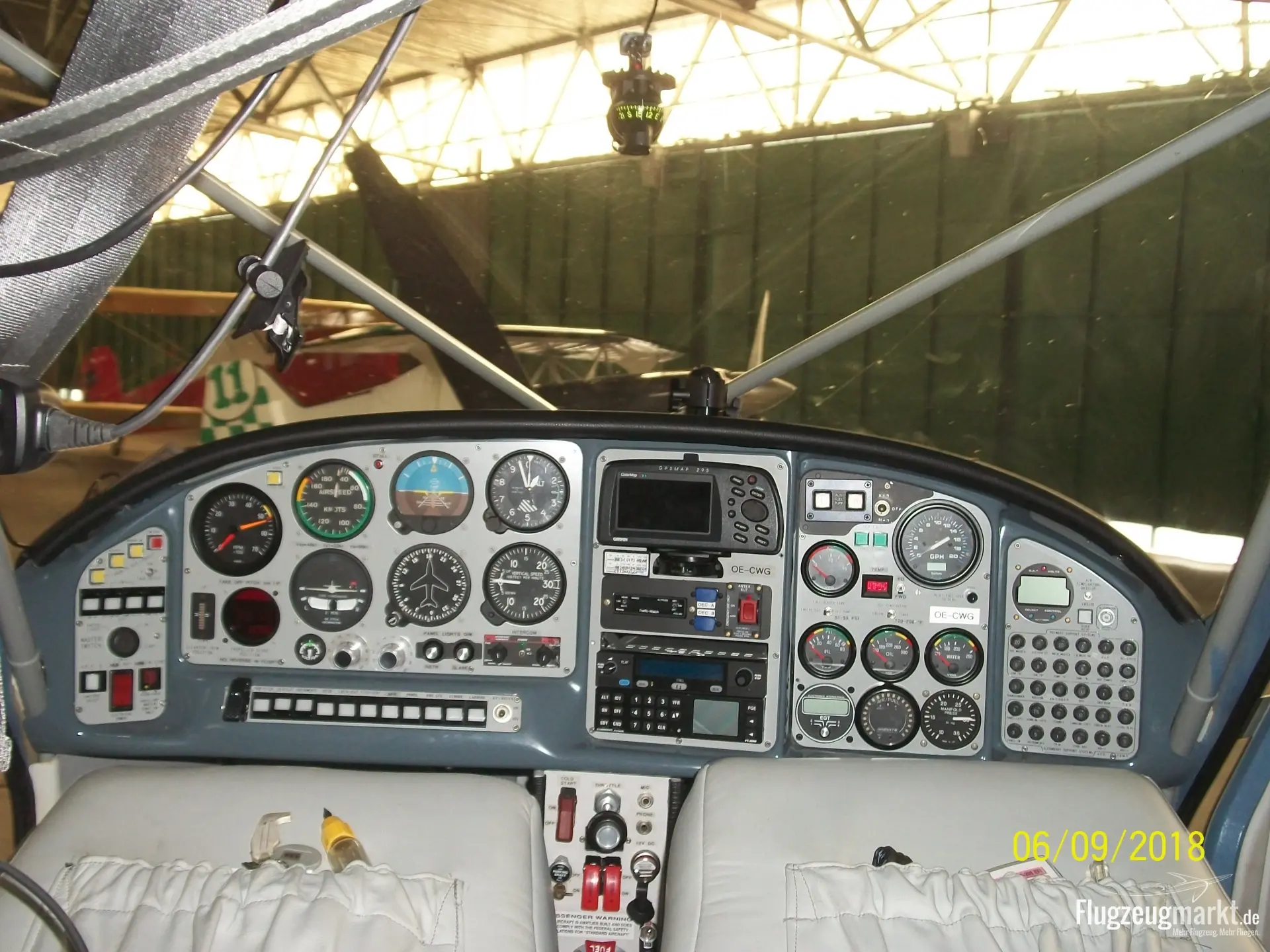
There is no single factory avionics suite comparable to Garmin Perspective or G1000. Used examples may have traditional round gauges, handheld or panel-mounted GPS, Garmin GNS or GTN navigators, or modern experimental glass panels from Garmin, Dynon, Advanced Flight Systems or similar suppliers.
Buying & value
For buyers, the central issue is build quality. Review construction logs, airworthiness documentation, operating limitations, weight and balance data, engine records and any major repairs. Pay particular attention to landing gear configuration, wing fold condition, fuel system details, control rigging, corrosion protection in metal components and the quality of composite finish work.
Common value drivers include a 180 hp engine, constant-speed propeller, modern ADS-B compliant avionics, autopilot, clean paint and a documented inspection history. In the used market, the Glasair GlaStar generally sits as a capable experimental two-seat utility aircraft, appealing to buyers who want more load-carrying flexibility than many light sport designs without moving into certified four-seat ownership costs.