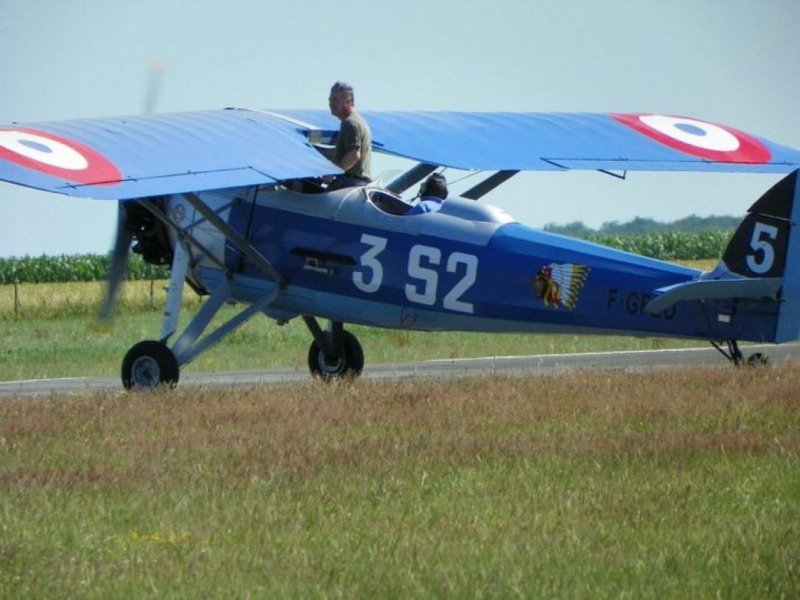
What a Morane-Saulnier MS 317 costs, how far it flies, and what it costs to keep
PlaneFox tracks 1 Morane-Saulnier MS 317 aircraft for sale and re-reads every one of them from the broker and dealer sites it watches, so the figures below move when the market moves. Every number on this page is measured from those live listings, not taken from a published price guide.
How far can a Morane-Saulnier MS 317 fly?
A Morane-Saulnier MS 317 flies about 324 nm, roughly 600 km, which is about 3 h 27 min in still air at typical cruise.
More questions about the Morane-Saulnier MS 317
How much does a Morane-Saulnier MS 317 cost?
What is the price range for a used Morane-Saulnier MS 317?
How many Morane-Saulnier MS 317 aircraft are for sale right now?
Where can I find a Morane-Saulnier MS 317 for sale?
What should I check when buying a used Morane-Saulnier MS 317?
About the Morane-Saulnier MS 317
Aircraft overview
The Morane-Saulnier MS 317 is a French two-seat parasol-wing aircraft derived from the prewar Morane-Saulnier MS.315 primary trainer. The MS 317 designation applies to postwar conversions of MS.315 airframes, most notably with a more powerful Continental radial engine for glider towing and club utility work. The original MS.315 first flew in the early 1930s and was built for military training, while the MS 317 became significant because it kept a simple, rugged interwar trainer useful in civilian service for decades. For buyers, it is best understood as a historic, open-cockpit, tandem-seat taildragger with strong collector appeal and practical vintage-aircraft utility.
Performance & specifications
Published performance for the Morane-Saulnier MS 317 varies with the source, propeller, conversion standard and aircraft condition, so individual logbooks and weight-and-balance data matter. The type is commonly associated with the Continental W-670 radial engine, a seven-cylinder unit of about 220 hp, replacing the lower-powered Salmson engine used on earlier MS.315 aircraft. Typical cruising speeds are in the vintage-trainer range, roughly around 75 to 85 knots rather than modern touring-aircraft speeds. Range is usually treated as short to moderate, suitable for local flying, positioning flights and aero-club operations. Service ceiling is generally quoted in the low-to-mid teens in feet for the family, but buyers should verify the figure for the specific airframe and engine installation. Useful load is also aircraft-specific, especially after restoration, radio installation and towing equipment changes.
Cabin & avionics
The MS 317 has two seats in tandem, with open cockpits and basic flight controls appropriate to a primary trainer. Visibility is characteristic of parasol-wing aircraft: good downward and sideward view, with the wing above the crew. Cabin comfort is minimal by modern standards, with wind exposure, limited baggage provision and vintage ergonomics. Avionics are normally simple VFR fitments, often a handheld or panel-mounted communications radio, transponder where required, and traditional analogue instruments. Integrated suites such as Garmin Perspective or Garmin G1000 are not typical or appropriate to the type.
Buying & value
Prospective buyers should confirm that the aircraft is an actual Morane-Saulnier MS 317 conversion, not merely an MS.315 or another related Morane-Saulnier trainer. Key checks include engine provenance, radial-engine maintenance history, fabric condition, corrosion in the steel-tube structure, wooden wing condition, control cables, landing gear, tailwheel assembly and any glider-tow installation. Documentation quality is central to value, especially because many examples have long military, aero-club and restoration histories. Market positioning is niche: the MS 317 competes less with modern trainers and more with vintage taildraggers, historic glider tugs and collectible French aircraft. Well-documented, airworthy examples with current engine support and clean paperwork command the strongest interest.