Porto Aviation Risen for Sale

What a Porto Aviation Risen costs, how far it flies, and what it costs to keep
PlaneFox tracks 3 Porto Aviation Risen aircraft for sale and re-reads every one of them from the broker and dealer sites it watches, so the figures below move when the market moves. Every number on this page is measured from those live listings, not taken from a published price guide.
How far can a Porto Aviation Risen fly?
A Porto Aviation Risen flies about 907 nm, roughly 1,680 km, which is about - in still air at typical cruise.
What does a Porto Aviation Risen cost to own?
A Porto Aviation Risen costs about EUR 1,304 a month to run, or about EUR 139 for every flight hour when it is flown 150 hours a year.
More questions about the Porto Aviation Risen
How much does a Porto Aviation Risen cost?
What is the price range for a used Porto Aviation Risen?
How many Porto Aviation Risen aircraft are for sale right now?
Where can I find a Porto Aviation Risen for sale?
What should I check when buying a used Porto Aviation Risen?
About the Porto Aviation Risen
Aircraft overview
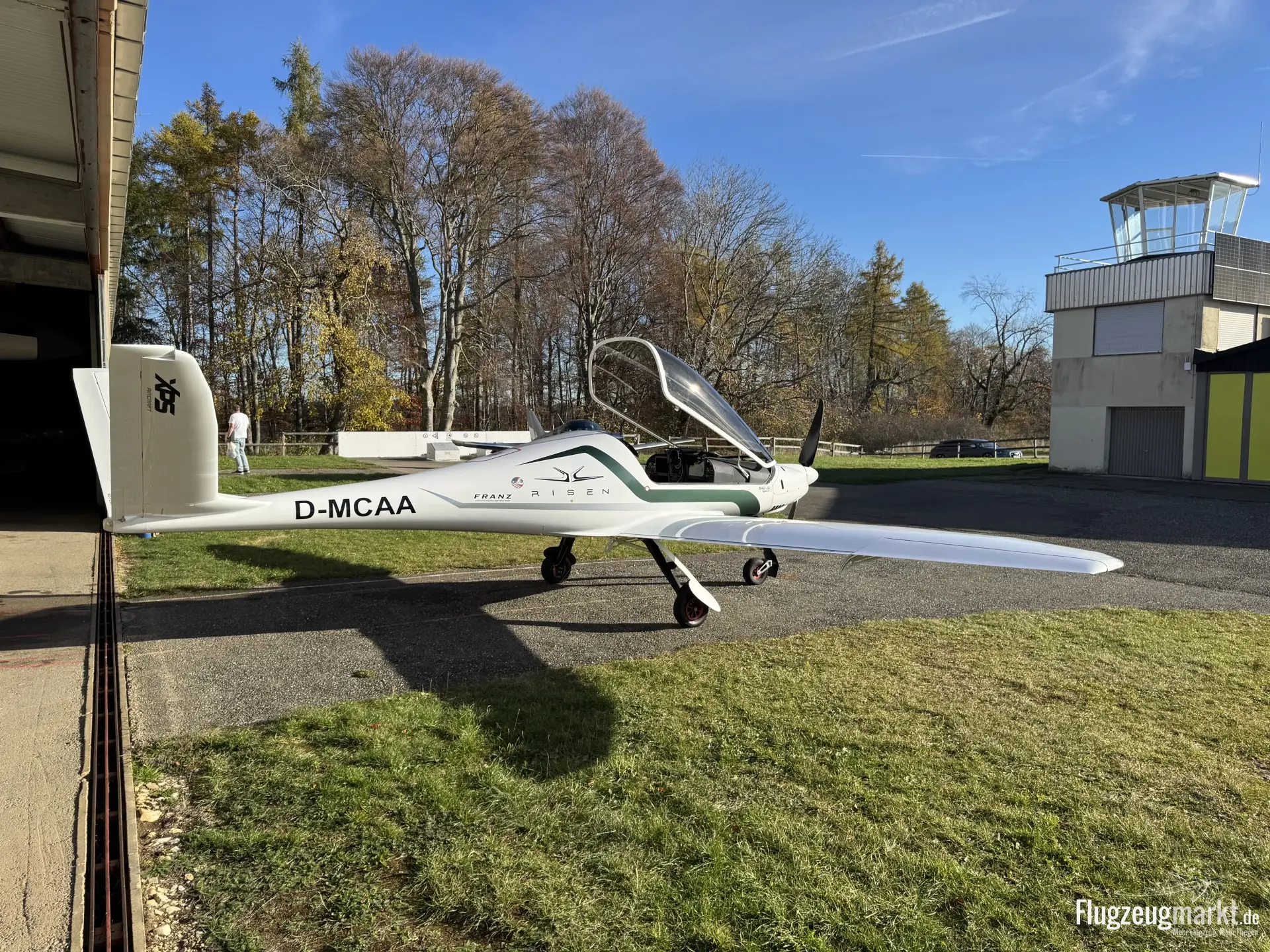
The Porto Aviation Risen is a two-seat, low-wing, all-composite sport aircraft developed and built by Porto Aviation Group in Italy. The type first flew in the early 2010s and has been produced in small numbers for the European ultralight and light sport market. It is best understood as a high-performance touring microlight: retractable tricycle landing gear, a clean carbon-fiber airframe, side-by-side seating and Rotax power. For buyers, its importance lies in combining low operating costs with cruise speeds more often associated with larger certified aircraft.
Performance & specifications
Typical Risen performance depends on engine, propeller, weight category and national certification basis. Common installations include the 100 hp Rotax 912 ULS and fuel-injected Rotax 912 iS, with some later aircraft using more powerful Rotax options. Published cruise figures are commonly around 150 to 165 knots in economical high-speed cruise, with long-range capability often quoted in the region of 700 nautical miles when equipped for extended touring. Service ceiling is commonly published at about 15,000 feet. Useful load varies materially with equipment, parachute installation, avionics fit and the applicable ultralight or light sport weight limit, so the individual aircraft weight and balance report is essential.
Cabin & avionics
The Risen has a compact two-seat cabin with a clear canopy, side-by-side controls and touring-oriented baggage provision. Cabin comfort is typical of modern composite sport aircraft: efficient rather than spacious, with visibility and aerodynamic cleanliness taking priority. Avionics are not standardized like a certified production trainer. Used examples may have Dynon SkyView, Garmin G3X Touch, Kanardia or other light-aircraft glass cockpit systems, usually paired with VHF radio, transponder, engine monitoring and, on better-equipped aircraft, two-axis autopilot and navigation integration. Garmin G1000 and Garmin Perspective are not typical factory fits for the Porto Aviation Risen.
Buying & value
Pre-owned Risen aircraft occupy a specialist, premium corner of the used microlight and light sport market. Buyers should verify the exact model year, engine variant, empty weight, maximum takeoff weight approval, registration category and whether the aircraft can legally be operated as intended in the target country. Inspection focus should include composite structure condition, landing gear operation, propeller history, Rotax maintenance records, cooling installation, avionics documentation and any ballistic parachute service life. Common value drivers include the Rotax 912 iS or later engine fit, constant-speed or adjustable propeller, modern glass avionics, autopilot, parachute status and documented factory support. Compared with conventional training LSAs, the Risen is positioned more as a fast personal touring aircraft than a basic utility platform.