What a Ventus costs, how far it flies, and what it costs to keep
PlaneFox tracks 3 Ventus aircraft for sale and re-reads every one of them from the broker and dealer sites it watches, so the figures below move when the market moves. Every number on this page is measured from those live listings, not taken from a published price guide.
What does a Schempp-Hirth Ventus cost to own?
A Schempp-Hirth Ventus costs about EUR 192 a month to run, or about EUR 15 for every flight hour when it is flown 150 hours a year.
More questions about the Ventus
How much does a Ventus cost?
What is the price range for a used Ventus?
How many Ventus aircraft are for sale right now?
Where can I find a Ventus for sale?
What should I check when buying a used Ventus?
About the Schempp-Hirth Ventus
Aircraft overview
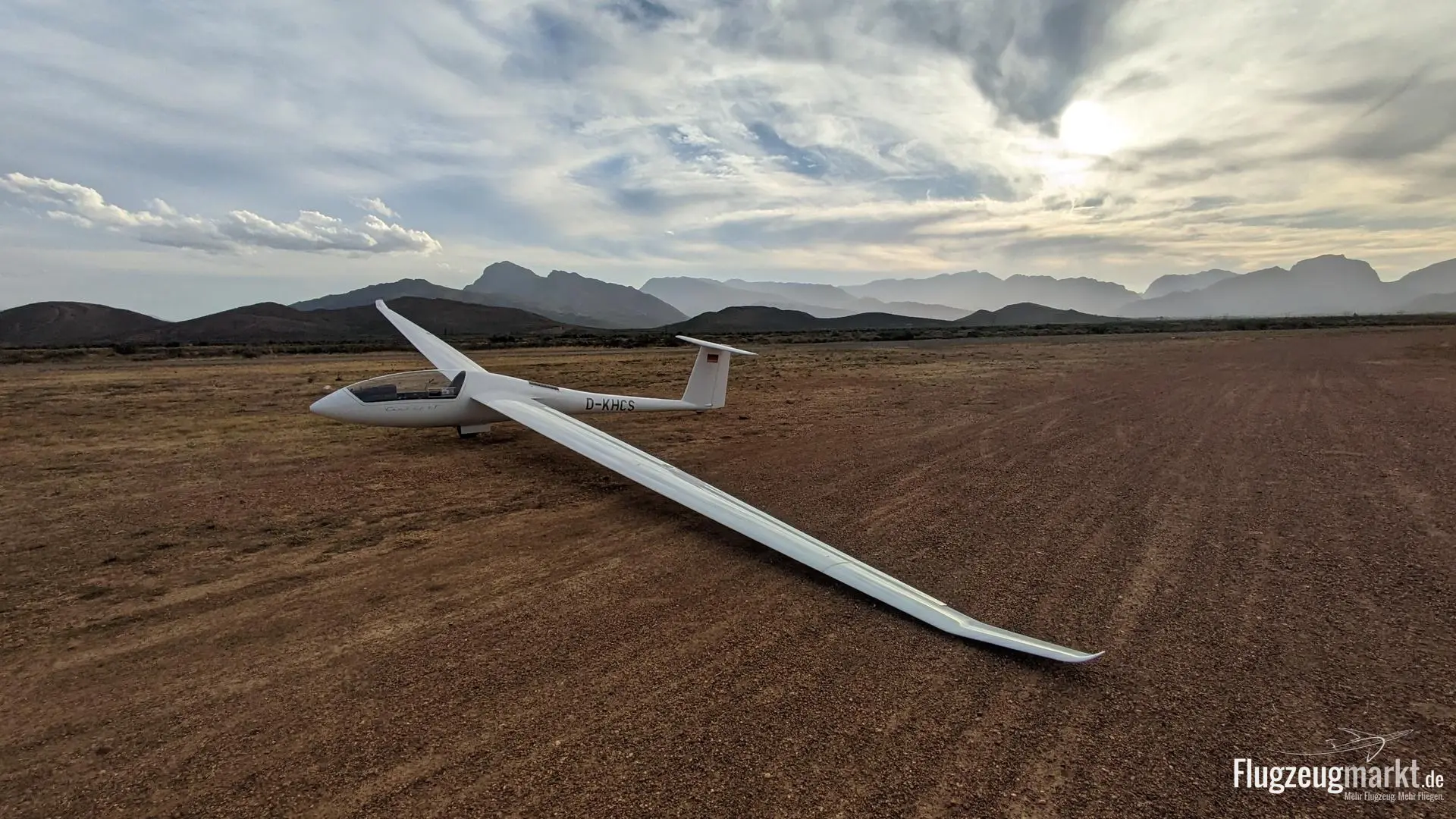
The Schempp-Hirth Ventus is a single-seat, flapped competition sailplane built by Schempp-Hirth in Germany. The original Ventus first flew in 1980 and was produced through the early 1990s before the Ventus-2 succeeded it. It was developed for the 15 Meter racing class, with later configurations also using 16.6 meter wing tips for improved cross-country performance. The type matters because it brought high-performance composite construction, effective flaps and strong competition results into a package that remains relevant on the used glider market.
Performance & specifications
Performance varies by variant, wing tips and ballast, but the Ventus is generally regarded as a high-performance cross-country glider with a best glide ratio of about 44:1 in common configurations. Typical cross-country cruise speeds are selected according to lift conditions and ballast, often in the 60 to 90 knot range rather than by a fixed powered-aircraft cruise figure. Range and ceiling are weather-dependent, as with all pure sailplanes. Most Ventus aircraft are unpowered, with no powerplant. Motorized Ventus cT and Ventus cM examples use retractable engine installations for sustainer or self-launch capability, depending on configuration. Buyers should verify the individual aircraft flight manual for approved weights, ballast limits and speeds.
Cabin & avionics
The Ventus has a single-seat cockpit under a clear canopy, with a reclined seating position typical of racing sailplanes. The Ventus a has a notably compact cockpit, while the Ventus b was introduced with a roomier fuselage for larger pilots. Avionics are not standardized like a certified touring aircraft. Used examples commonly carry an electronic variometer, soaring flight computer, GPS navigation display, VHF radio, transponder and often FLARM or compatible traffic awareness equipment. Garmin Perspective and Garmin G1000 suites are not typical installations for this type.
Buying & value
Used-market evaluation should focus on variant, cockpit fit, wing-tip configuration, damage history, trailer condition, instrument fit and maintenance documentation. Inspect the composite structure carefully, including control linkages, flap rigging, landing gear, water ballast system and canopy condition. Common buyer distinctions include Ventus a versus Ventus b cockpit size, 15 meter versus 16.6 meter tips, and pure glider versus Ventus cT or Ventus cM motorized versions. In the used market, the Schempp-Hirth Ventus typically sits above older club-class sailplanes and below newer Ventus-2, Ventus-3 and current high-end competition types.