Spacek SD-1 Minisport for Sale

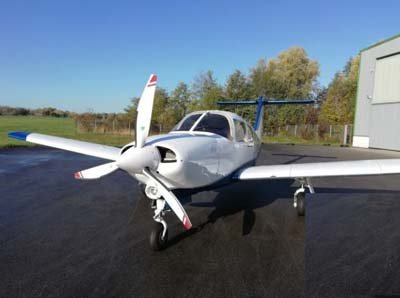
What a Spacek SD-1 Minisport costs, how far it flies, and what it costs to keep
PlaneFox tracks 4 Spacek SD-1 Minisport aircraft for sale and re-reads every one of them from the broker and dealer sites it watches, so the figures below move when the market moves. Every number on this page is measured from those live listings, not taken from a published price guide.
How far can a Spacek SD-1 Minisport fly?
A Spacek SD-1 Minisport flies about 432 nm, roughly 800 km, which is about 4 h 42 min in still air at typical cruise.
What does a Spacek SD-1 Minisport cost to own?
A Spacek SD-1 Minisport costs about EUR 445 a month to run, or about EUR 48 for every flight hour when it is flown 150 hours a year.
More questions about the Spacek SD-1 Minisport
How much does a Spacek SD-1 Minisport cost?
What is the price range for a used Spacek SD-1 Minisport?
How many Spacek SD-1 Minisport aircraft are for sale right now?
Where can I find a Spacek SD-1 Minisport for sale?
What should I check when buying a used Spacek SD-1 Minisport?
About the Spacek SD-1 Minisport
Aircraft overview
The Spacek SD-1 Minisport is a Czech designed, single seat ultralight and microlight sport aircraft created by designer Igor Špaček and produced by Spacek s.r.o. The type first flew in 2005 and has been offered mainly as a kit or plans built aircraft, with factory support varying by market. It is a compact low wing design using a largely wooden structure with composite fairings and a fixed conventional landing gear. Its importance in the used market comes from its very low operating cost, small hangar footprint and efficient performance from modest engine power.
Performance & specifications
Published figures for the Spacek SD-1 Minisport vary with engine, propeller, build standard and national ultralight limits. A commonly cited configuration uses a Hirth F-33 two stroke engine of about 28 hp. Typical cruise speed is around 95 knots, with a maximum speed published near 109 knots. Range is commonly listed at about 320 nautical miles, depending on fuel capacity and reserve policy. Published service ceiling is about 13,000 feet. Gross weight is often quoted around 529 lb, with an empty weight near 240 lb, giving a useful load in the high 200 lb range. Buyers should verify the actual weight and balance sheet for each individual aircraft.
Cabin & avionics
The Spacek SD-1 Minisport is strictly a single seat aircraft, with a narrow cockpit sized around the ultralight mission rather than touring comfort. Entry, seating position, rudder pedal reach and visibility should be checked in person, especially by taller pilots. Avionics are normally simple and non certified: airspeed indicator, altimeter, tachometer, engine temperature monitoring and basic electrical switches. Many examples add a handheld or panel radio, portable GPS, tablet mount, intercom provision or a compact transponder where required. Integrated suites such as Garmin Perspective or Garmin G1000 are not typical for this aircraft category.
Buying & value
Used Spacek SD-1 Minisport aircraft are best evaluated as individual builds. Important checks include build documentation, conformity with the applicable ultralight or experimental category, empty weight, center of gravity data, fabric and wood condition, landing gear attachment areas, control rigging, fuel system layout and engine installation quality. Engine time matters, but maintenance history and correct operating temperatures are just as important on lightweight powerplants. Common differences include engine choice, propeller type, wheel pants, canopy details, instrument fit and radio equipment. In the used market, the model sits as a low cost personal sport aircraft for solo local flying, efficient short trips and pilots who value simplicity over payload or certified aircraft capability.