Yakovlev YAK-12 for Sale
What a Yakovlev YAK-12 costs, how far it flies, and what it costs to keep
PlaneFox tracks 1 Yakovlev YAK-12 aircraft for sale and re-reads every one of them from the broker and dealer sites it watches, so the figures below move when the market moves. Every number on this page is measured from those live listings, not taken from a published price guide.
How far can a Yakovlev YAK-12 fly?
A Yakovlev YAK-12 flies about 413 nm, roughly 765 km, which is about 5 h 59 min in still air at typical cruise.
What does a Yakovlev YAK-12 cost to own?
A Yakovlev YAK-12 costs about EUR 2,006 a month to run, or about EUR 215 for every flight hour when it is flown 150 hours a year.
More questions about the Yakovlev YAK-12
How much does a Yakovlev YAK-12 cost?
What is the price range for a used Yakovlev YAK-12?
How many Yakovlev YAK-12 aircraft are for sale right now?
Where can I find a Yakovlev YAK-12 for sale?
What should I check when buying a used Yakovlev YAK-12?
About the Yakovlev YAK-12
Aircraft overview
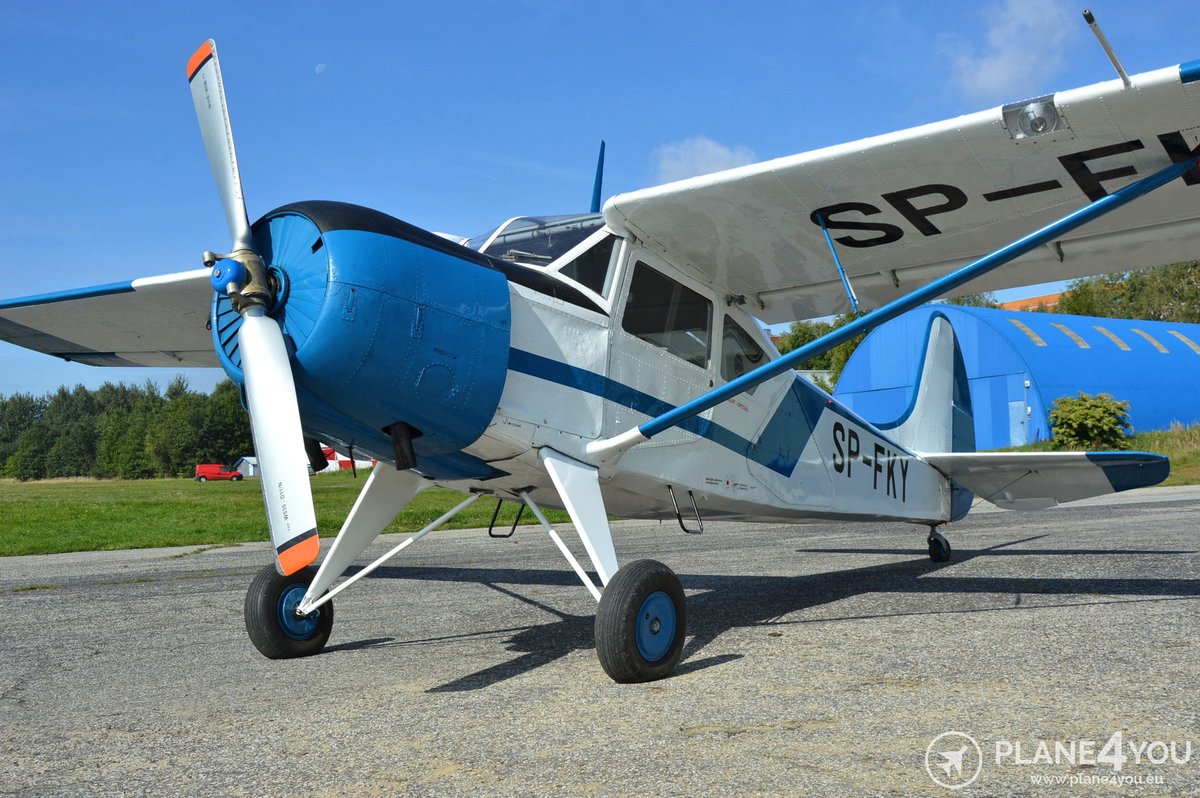
The Yakovlev YAK-12 is a Soviet light utility aircraft developed by the Yakovlev Design Bureau for liaison, observation, training, agricultural support and short-field transport work. It first flew in 1947 and entered production in the late 1940s, with manufacture continuing in several forms into the 1960s, including licensed Polish production by PZL. The type is a high-wing, strut-braced tailwheel aircraft with fixed landing gear and generous low-speed handling. Its importance comes from its practical role across civil and military operators: a simple, rugged four-seat aircraft intended for unimproved strips rather than paved-airport convenience.
Performance & specifications
Performance depends strongly on variant, engine and propeller fit. Later Yakovlev YAK-12M and YAK-12A aircraft commonly use the Ivchenko AI-14R nine-cylinder radial engine rated at about 260 hp, while earlier examples used lower-powered Shvetsov M-11 derivatives. Typical cruise speed for AI-14R powered aircraft is around 85 to 95 knots. Published range figures are commonly in the 300 to 390 nautical mile class, depending on fuel, loading and reserve assumptions. Service ceiling is generally quoted around 13,000 feet for later variants. Maximum takeoff weight for the Yakovlev YAK-12M is about 3,200 lb, with useful load commonly around 1,300 lb in published specifications, though individual aircraft weight and equipment records should be checked carefully.
Cabin & avionics
The Yakovlev YAK-12 is normally configured for four seats, with a utilitarian cabin, large glazing and good outward visibility for observation and short-field work. Access, trim and finish are closer to military and agricultural utility standards than to modern touring aircraft. Avionics are not standardized across the fleet. Original aircraft were equipped with basic analog flight and engine instruments, often of Soviet or Polish origin. Used examples may have retrofitted VHF comm radios, transponders, portable or panel-mounted GPS units and updated engine monitoring, but integrated suites such as Garmin G1000 or Garmin Perspective are not typical for the type.
Buying & value
Prospective buyers should focus on documentation, airframe corrosion, fabric condition where applicable, landing gear alignment, control cable condition and the service history of the radial engine. Parts support can depend on the country of registration and the exact variant, so confirming engine, propeller and component traceability is important. Common variants seen on the used market include the Yakovlev YAK-12M, with revised fuselage and AI-14R power, and the Yakovlev YAK-12A, with further aerodynamic refinements. In market terms, the Yakovlev YAK-12 sits as a specialist vintage utility aircraft: more practical and load-capable than many light classics, but less convenient than modern certified four-seat trainers for routine cross-country use.