Airbus A321 for Sale
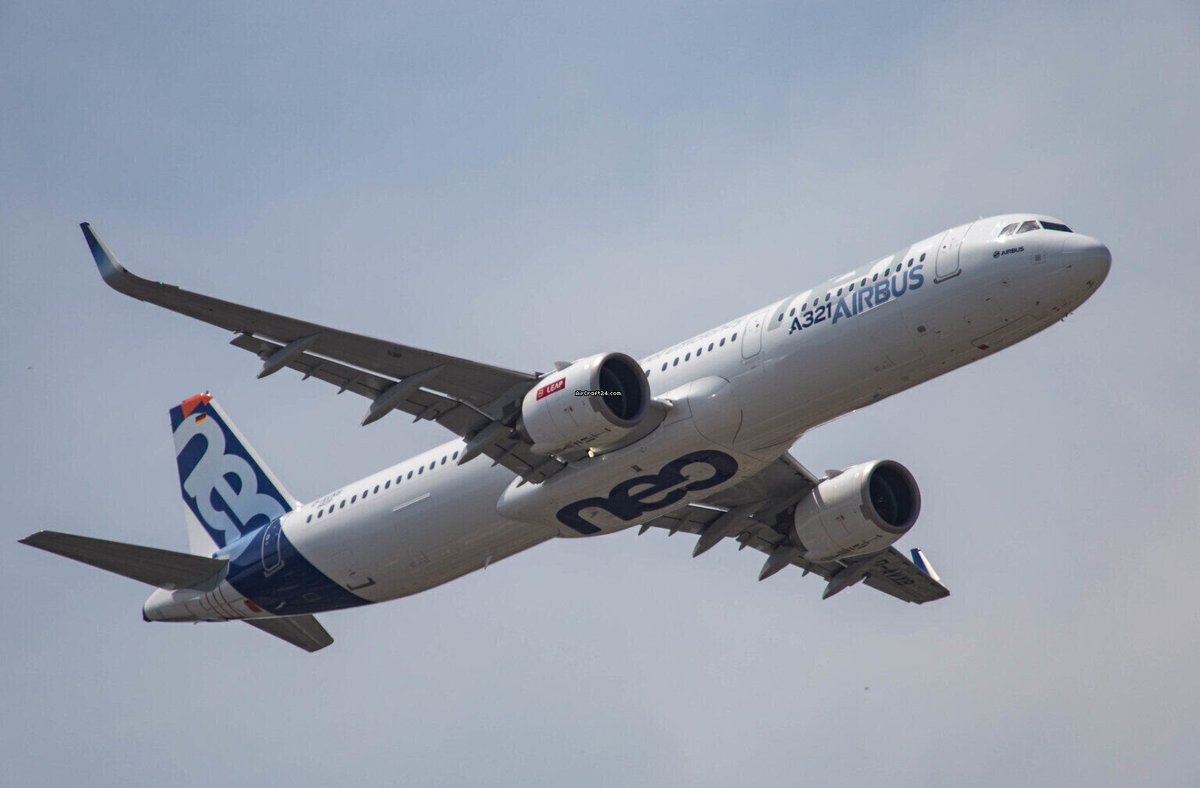
Airbus A321Neo Brand New
Contact for Price
Un. Arab. Emir.
jetAirbus A321 Freighter
Contact for Price
Un. Arab. Emir.
jet
Airbus A321Neo
Contact for Price
Un. Arab. Emir.
jetAirbus A321
Contact for Price
Un. Arab. Emir.
jetAirbus A321
Contact for Price
Un. Arab. Emir.
jetAirbus A321 Freighter
Contact for Price
Un. Arab. Emir.
jetAirbus A321
Contact for Price
Un. Arab. Emir.
jet
Airbus A321
Contact for Price
Un. Arab. Emir.
jetAirbus A321
Contact for Price
Un. Arab. Emir.
jet2017 Airbus A321
$41,000,000
jetWhat a Airbus A321 costs, how far it flies, and what it costs to keep
PlaneFox tracks 10 Airbus A321 aircraft for sale and re-reads every one of them from the broker and dealer sites it watches, so the figures below move when the market moves. Every number on this page is measured from those live listings, not taken from a published price guide.
How far can a Airbus A321 fly?
A Airbus A321 flies about 3,200 nm, roughly 5,926 km, which is about 7 h 10 min in still air at typical cruise.
More questions about the Airbus A321
How much does a Airbus A321 cost?
What is the price range for a used Airbus A321?
How many Airbus A321 aircraft are for sale right now?
Where can I find a Airbus A321 for sale?
What should I check when buying a used Airbus A321?
About the Airbus A321
Aircraft overview
The Airbus A321 is the stretched member of the Airbus A320 family, built by Airbus as a single aisle, short to medium range commercial jet. The A321 first flew in March 1993 and entered airline service in 1994. Production continues through the A321neo family, while earlier A321ceo aircraft remain active in large numbers on the used market. The type matters because it offers A320 family cockpit commonality with materially higher seat capacity, making it a common choice for high density domestic routes, leisure operations and thinner medium haul markets that do not require a widebody.
Performance & specifications
Typical cruise speed is about Mach 0.78, roughly 450 knots depending on altitude and conditions. Certified range depends strongly on variant and cabin configuration: an A321-200 is commonly associated with about 3,200 nautical miles, while A321neo and long range versions extend capability, with A321LR around 4,000 nautical miles and A321XLR designed for up to about 4,700 nautical miles. Maximum operating altitude is 39,100 feet. Typical maximum payload is in the region of 55,000 lb, subject to variant, weight option and layout. A321ceo aircraft use CFM International CFM56-5B or International Aero Engines V2500 engines. A321neo aircraft use CFM LEAP-1A or Pratt & Whitney PW1100G geared turbofan engines.
Cabin & avionics
The A321 cabin is sized for high density single aisle operations. Seating commonly ranges from about 185 to 220 passengers, with higher certified limits on later aircraft and dense layouts. Buyers should distinguish between cabin door configurations, including the Airbus Cabin Flex arrangement on many A321neo aircraft, as this affects seating capacity, galley and lavatory placement, and exit row layout. The cockpit follows Airbus A320 family philosophy, with fly by wire controls, side sticks, electronic flight instrument displays and flight management systems. Avionics fit varies by build standard and airline specification, rather than Garmin Perspective or G1000 type suites.
Buying & value
Used A321 values are shaped by age, engine type, maintenance status, weight specification, cabin density and remaining life on major components. Engine condition is central, especially LLP status, shop visit history and any applicable service bulletins or airworthiness directives. Common market distinctions include A321-100, the less common early version with shorter range, A321-200, the main earlier production model, A321neo, and the longer range A321LR and A321XLR. Sharklets, updated cabins, higher maximum takeoff weight options, connectivity, and modern lavatory or galley layouts can materially affect utility. In the used market, the A321 is typically positioned above the A320 in capacity and lease cost, but below widebody aircraft in trip cost and infrastructure requirements.