Fairchild F24 for Sale
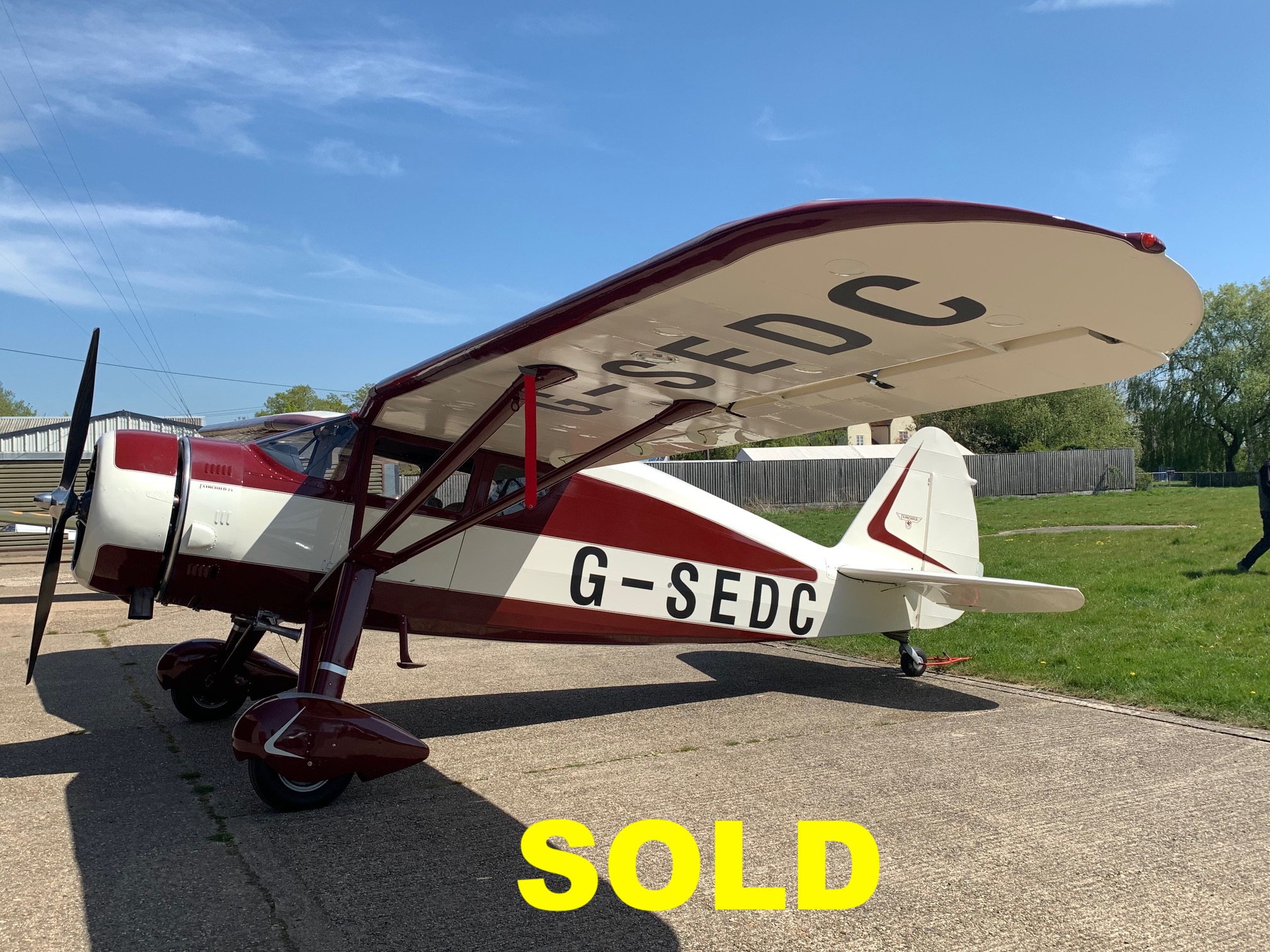
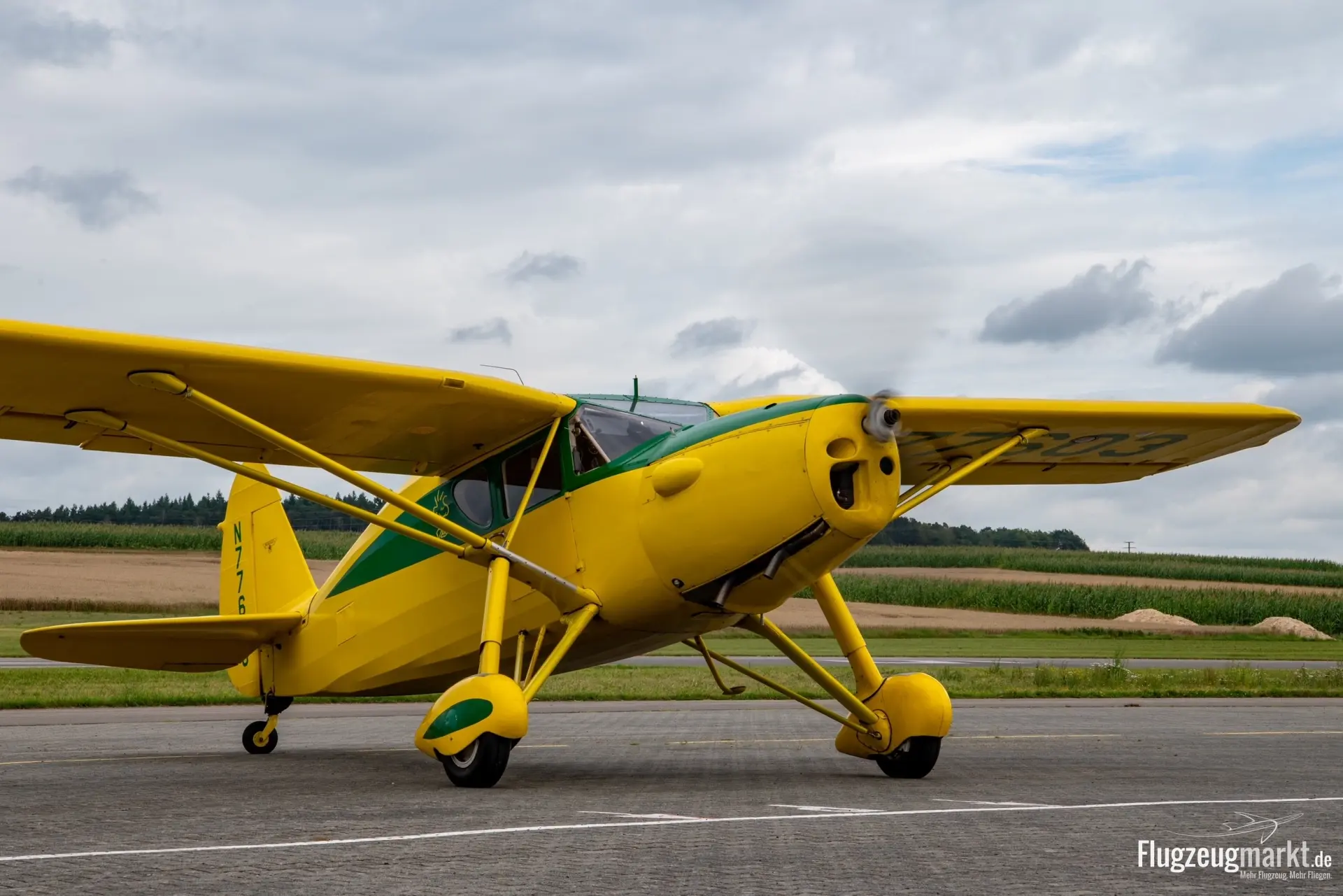
What a Fairchild F24 costs, how far it flies, and what it costs to keep
PlaneFox tracks 4 Fairchild F24 aircraft for sale and re-reads every one of them from the broker and dealer sites it watches, so the figures below move when the market moves. Every number on this page is measured from those live listings, not taken from a published price guide.
How far can a Fairchild F24 fly?
A Fairchild F24 flies about 404 nm, roughly 748 km, which is about 3 h 53 min in still air at typical cruise.
What does a Fairchild F24 cost to own?
A Fairchild F24 costs about EUR 1,830 a month to run, or about EUR 192 for every flight hour when it is flown 150 hours a year.
More questions about the Fairchild F24
How much does a Fairchild F24 cost?
What is the price range for a used Fairchild F24?
How many Fairchild F24 aircraft are for sale right now?
Where can I find a Fairchild F24 for sale?
What should I check when buying a used Fairchild F24?
About the Fairchild F24
Aircraft overview
The Fairchild F24 is a four-seat, high-wing, tailwheel cabin aircraft built by Fairchild Aircraft in the United States. The type first flew in 1932 and remained in production into 1948, with substantial civil and military use before, during and after the Second World War. It was conceived as a comfortable personal and business aircraft rather than a trainer or utility-only design, with a wide cabin, good visibility and forgiving handling. Military versions served as the UC-61 Forwarder, but the civilian Fairchild F24 is valued today as a practical antique aircraft with genuine touring capability.
Performance & specifications
Performance varies meaningfully by engine, propeller, empty weight and restoration standard. Typical cruise speed is about 95 to 105 knots, with economical operation rather than high speed as the main appeal. Range is commonly in the region of 400 to 450 nautical miles, depending on fuel capacity and power setting. Useful load is often around 850 to 1,000 lb, enough for two to three adults and baggage in many real-world operations, though each aircraft must be checked by its current weight and balance data. Service ceiling is commonly quoted around 12,000 to 15,000 feet. Powerplants include Warner Scarab radial engines, typically 145 or 165 hp, and Ranger inverted inline engines, often 175 or 200 hp depending on variant.
Cabin & avionics
The Fairchild F24 cabin seats four in a two-row layout, with unusually generous width for a 1930s light aircraft. Large side windows, a car-like door arrangement on many examples and a stable high-wing platform make it pleasant for relaxed touring. Avionics are not standardized. Most surviving aircraft have been updated from original instrumentation and may carry a basic VFR suite with comm radio, transponder, ADS-B equipment and possibly a portable or panel-mounted GPS. Integrated glass cockpits such as Garmin G1000 or Garmin Perspective are not typical for the type.
Buying & value
Buyers should focus on airframe condition, fabric age, wood structure inspection history, corrosion control, landing gear condition and engine support. Documentation quality is especially important, including logs, major repairs, STCs and evidence of proper rigging. The main ownership distinction is often engine choice: Warner radial aircraft offer period character, while Ranger-powered examples may appeal to buyers prioritizing parts familiarity and operating simplicity. Common upgrades include modern radios, ADS-B, improved brakes, shoulder harnesses and tasteful interior refurbishment. In the current PlaneFox used-market sample, Fairchild F24 asking prices average about EUR 67,000, with listings ranging from approximately EUR 47,000 to EUR 105,000, placing the model in the accessible vintage touring segment rather than the high-end warbird category.