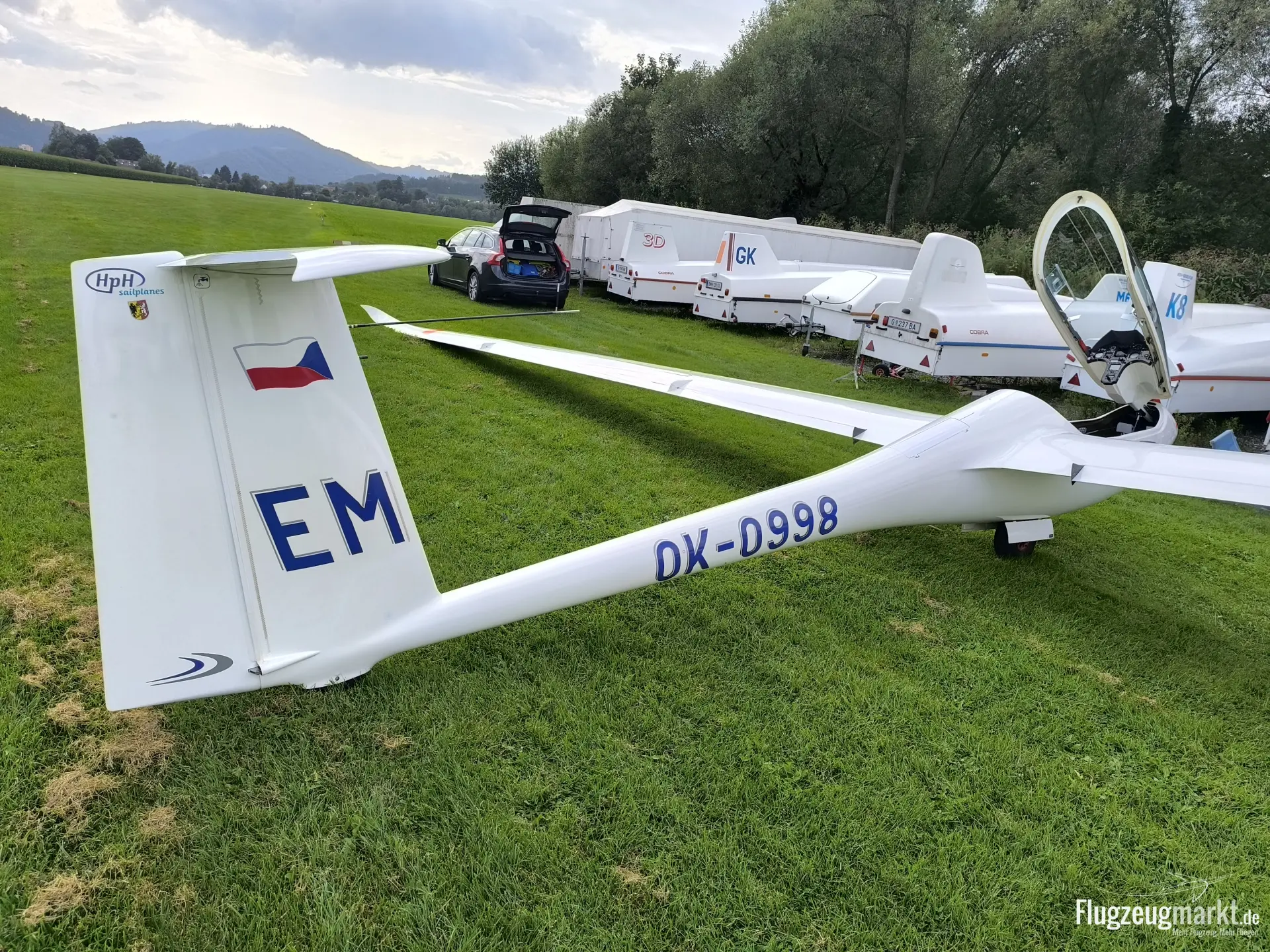
What a Glasfluegel 304 costs, how far it flies, and what it costs to keep
PlaneFox tracks 2 Glasfluegel 304 aircraft for sale and re-reads every one of them from the broker and dealer sites it watches, so the figures below move when the market moves. Every number on this page is measured from those live listings, not taken from a published price guide.
What does a Glasfluegel 304 cost to own?
A Glasfluegel 304 costs about EUR 308 a month to run, or about EUR 25 for every flight hour when it is flown 150 hours a year.
More questions about the Glasfluegel 304
How much does a Glasfluegel 304 cost?
What is the price range for a used Glasfluegel 304?
How many Glasfluegel 304 aircraft are for sale right now?
Where can I find a Glasfluegel 304 for sale?
What should I check when buying a used Glasfluegel 304?
About the Glasfluegel 304
Aircraft overview
The Glasflügel 304 is a German single-seat composite sailplane developed by Glasflügel for FAI 15 metre class competition. It first flew in 1980 and was produced in limited numbers before Glasflügel ceased operations in the early 1980s. The type matters because it represents the late Glasflügel design philosophy: clean composite construction, precise handling, retractable landing gear and water ballast capability in a compact 15 metre package. It should not be confused with later HpH-built 304 derivatives, which share lineage but are not the original Glasflügel 304.
Performance & specifications
The Glasflügel 304 is a pure sailplane, so range, ceiling and cruise speed depend on weather, pilot technique, ballast and tow or launch height rather than a fuel specification. Published figures commonly cite a 15 m wingspan, a best glide ratio of about 42:1 and a never exceed speed of about 146 kt. Cross-country inter-thermal speeds are selected by the pilot, often varying widely with lift strength and ballast. The aircraft has no powerplant in its standard form. Useful load depends on the individual aircraft weight, installed equipment and approved water ballast, so current weight and balance data are essential for any comparison.
Cabin & avionics
The cockpit is a single-seat glider layout with a reclined seating position, clear canopy, center-mounted control stick and conventional sailplane controls for airbrakes, trim, landing gear and ballast. Cabin comfort is typical of high-performance 15 metre sailplanes of its period: efficient rather than spacious, with fit strongly influenced by cushions, rudder pedal adjustment and panel layout. Avionics vary substantially by aircraft. Original panels were simple, while many used examples now carry modern electronic variometers, flight computers, GPS navigation displays, 8.33 kHz radios, FLARM traffic awareness and, in some regions, Mode S transponders. Integrated Garmin Perspective or G1000-style suites are not typical for this aircraft class.
Buying & value
Buyers should focus on composite condition, repair history, gelcoat cracking, control system rigging, airbrake operation, landing gear condition, canopy fit and water ballast integrity. Logbooks should confirm inspections, weight and balance, applicable service information and any major repairs. Common upgrades include modern varios, FLARM, updated radios, new batteries, refined seating, winglets where approved and refreshed instrument panels. In the used market, the Glasflügel 304 generally sits above older club gliders in performance and handling appeal, but below newer 18 metre and current-generation racing sailplanes in speed, support depth and cockpit ergonomics.