Gulfstream GII / GIII for Sale
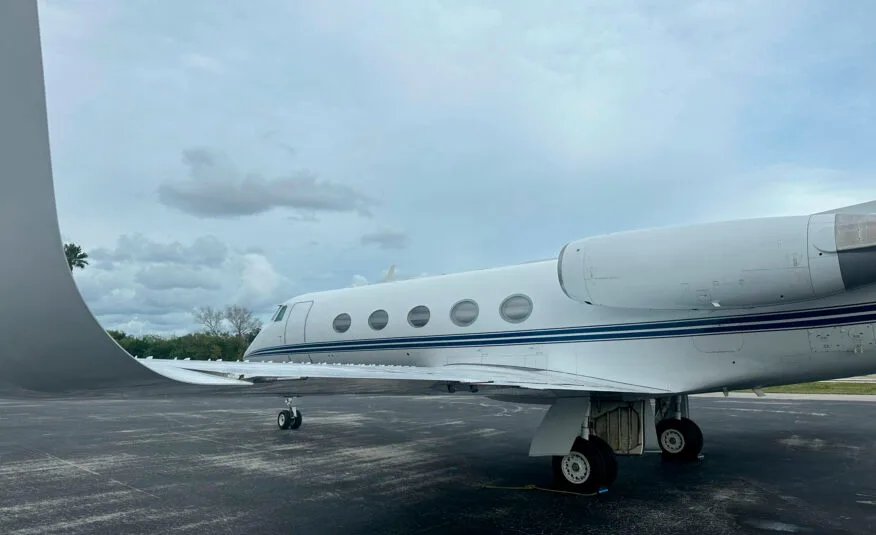
What a Gulfstream GII / GIII costs, how far it flies, and what it costs to keep
PlaneFox tracks 5 Gulfstream GII / GIII aircraft for sale and re-reads every one of them from the broker and dealer sites it watches, so the figures below move when the market moves. Every number on this page is measured from those live listings, not taken from a published price guide.
How far can a Gulfstream GII / GIII fly?
A Gulfstream GII / GIII flies about 3,750 nm, roughly 6,945 km, which is about 7 h 51 min in still air at typical cruise.
What does a Gulfstream GII / GIII cost to own?
A Gulfstream GII / GIII costs about EUR 132,717 a month to run, or about EUR 5,915 for every flight hour when it is flown 150 hours a year.
More questions about the Gulfstream GII / GIII
How much does a Gulfstream GII / GIII cost?
What is the price range for a used Gulfstream GII / GIII?
How many Gulfstream GII / GIII aircraft are for sale right now?
Where can I find a Gulfstream GII / GIII for sale?
What should I check when buying a used Gulfstream GII / GIII?
About the Gulfstream GII / GIII
Aircraft overview
The Gulfstream GII / GIII family represents the early large cabin business jet line developed by Grumman American, later Gulfstream American. The Gulfstream GII first flew in 1966 and was produced from the late 1960s into 1980. The Gulfstream GIII first flew in 1979 and entered production in 1980, continuing until the mid 1980s. Both aircraft are long range, twin engine business jets intended for intercontinental corporate transport. They matter in the used market because they established the Gulfstream large cabin formula: a stand up cabin, transoceanic range, high altitude capability and robust airframe construction.
Performance & specifications
Typical cruise speeds are in the high 400 knot range, with long range cruise commonly planned around Mach 0.80. The Gulfstream GII offers about 3,400 to 3,500 nautical miles of range in favorable configurations, while the Gulfstream GIII, with its redesigned wing, winglets and increased fuel capacity, extends typical range to about 3,600 to 3,700 nautical miles. Certified ceiling is 45,000 feet. Published useful load varies by serial number, interior and modifications, but both aircraft are generally in the 30,000 lb class. Power comes from two Rolls Royce Spey turbofan engines, a durable but older generation powerplant that strongly influences fuel burn, noise compliance and maintenance planning.
Cabin & avionics
The cabin is a principal reason buyers still consider the Gulfstream GII / GIII. Typical layouts seat 10 to 14 passengers, with club seating, divans, a forward or aft galley and an enclosed lavatory. The cabin is wide, quiet by its period and suited to longer sectors, although refurbishment quality varies widely across the fleet. Original avionics were analog and electromechanical, not Garmin Perspective or G1000 systems. Many aircraft have been upgraded with Collins, Honeywell or Universal avionics, dual FMS, GPS, TCAS, EGPWS, RVSM capability, ADS-B Out and modern radios. Retrofit depth should be verified aircraft by aircraft.
Buying & value
Prospective buyers should focus on engine condition, remaining life limited parts, corrosion inspections, fuel tank condition, pressurization history, landing gear status, avionics compliance and documentation quality. Noise compliance is important, since many aircraft require hush kits or other approved modifications for Stage 3 operations. Common market distinctions include the original Gulfstream GII, the GIIB conversion with Gulfstream GIII style wing and winglets, and the Gulfstream GIII with factory aerodynamic and range improvements. In today’s market, the Gulfstream GII / GIII usually trades as a low acquisition cost large cabin jet, balanced against higher fuel burn, aging systems and significant maintenance exposure.