Learjet 60 for Sale

1994 Bombardier Learjet 60
Contact for Price
jetOMF 160 Symphony
€69,800
EDRE, Germany
2012 Bombardier Learjet 60XR
$4,195,000
Germany
jet
Bombardier Learjet 60
Contact for Price
jetBombardier Lear 60XR
Contact for Price
India
jet2011
Contact for Price
2007
Contact for Price
Lycoming engine 0-360-B2C (Ref: 207)
Contact for Price
UK
helicopter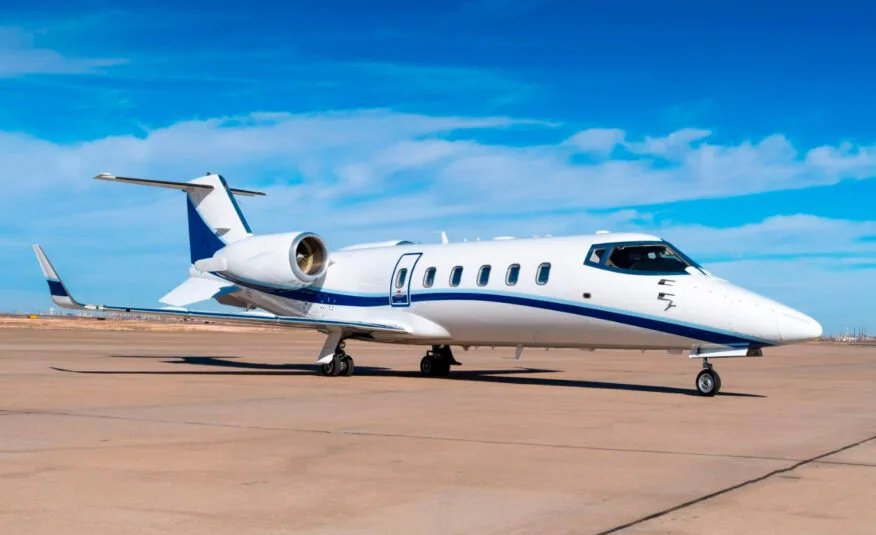
1995 Learjet 60
$1,995,000
USA
jet
1998 Learjet 60
BRL 18,000,000
Brazil
jet2026 VELOCE PLANES VELOCE 600
$297,000
Whiteville
1996 LEARJET 60
Contact for Price
Penn Yan (KPEO)
jet2026 VELOCE PLANES VELOCE 600
$1,200,000
Dallas
Not Listed LEARJET 60XR
Contact for Price
USA
jet2003 LEARJET 60SE
Contact for Price
Springfield
jetNot Listed LEARJET 60
Contact for Price
USA
jet2026 VELOCE PLANES VELOCE 600
$750,000
Wichita
What a Learjet 60 costs, how far it flies, and what it costs to keep
PlaneFox tracks 17 Learjet 60 aircraft for sale and re-reads every one of them from the broker and dealer sites it watches, so the figures below move when the market moves. Every number on this page is measured from those live listings, not taken from a published price guide.
How much does a Learjet 60 cost?
There are 17 Learjet 60 listings on PlaneFox right now, 7 of them priced. They ask between EUR 70,000 and EUR 3,750,000, with a median of EUR 1,070,000.
How far can a Learjet 60 fly?
A Learjet 60 flies about 2,418 nm, roughly 4,478 km, which is about 5 h 12 min in still air at typical cruise.
What does a Learjet 60 cost to own?
A Learjet 60 costs about EUR 87,885 a month to own and fly: EUR 79,947 to run it, plus EUR 7,938 for a loan over 15 years on the median asking price here, EUR 1,072,099. Flown 150 hours a year, that is about EUR 3,825 for every flight hour.
More questions about the Learjet 60
How much does a Learjet 60 cost?
What is the price range for a used Learjet 60?
How many Learjet 60 aircraft are for sale right now?
Where can I find a Learjet 60 for sale?
What should I check when buying a used Learjet 60?
About the Learjet 60
Aircraft overview
The Learjet 60 is a Bombardier Learjet mid size business jet developed from the Learjet 55 family, with a longer fuselage, a revised wing with winglets and more powerful Pratt & Whitney Canada engines. The prototype first flew in 1990, with customer deliveries beginning in the early 1990s. Standard Learjet 60 production ran until the introduction of the updated Learjet 60XR, which remained in production into the 2010s. For buyers, the model matters because it combines classic Learjet speed and altitude capability with a larger cabin than earlier light Learjets, placing it in a practical segment for regional and longer domestic business travel.
Performance & specifications
Typical long range cruise is in the low 400 knot range, while high speed cruise is commonly cited at about 450 knots. Maximum range is about 2,400 nautical miles under favorable conditions, making missions such as coast to coast United States trips possible with appropriate payload, weather and reserve planning. The aircraft is certified to 51,000 feet, a key Learjet operating trait that can help with weather avoidance and traffic. Power comes from two Pratt & Whitney Canada PW305A turbofan engines, each rated at approximately 4,600 pounds of thrust. Useful load varies by aircraft configuration, equipment and service history, so buyers should review the current weight and balance report rather than rely on generic brochure figures.
Cabin & avionics
The Learjet 60 cabin is typically arranged for six to seven passengers, often with a forward club, aft club or side facing seat, a refreshment center and an enclosed aft lavatory. It is not a stand up cabin, but it offers more length and passenger comfort than the smaller Learjet 31 and Learjet 35 series. Early aircraft were delivered with Rockwell Collins Pro Line 4 avionics, including electronic flight displays and integrated flight management equipment. The Learjet 60XR introduced the Collins Pro Line 21 flight deck with larger displays and a more modern interface. Garmin Perspective and G1000 are not standard Learjet 60 avionics suites.
Buying & value
Used Learjet 60 values are strongly influenced by engine status, hot section and overhaul timing, avionics modernization, paint, interior condition and compliance with mandates such as ADS B. Buyers should distinguish clearly between the original Learjet 60 and the Learjet 60XR, since the XR brings Pro Line 21 avionics and cabin updates. Common upgrades include WAAS LPV capability, updated transponders, cockpit voice recorder changes, cabin connectivity and interior refurbishment. In the used market, the Learjet 60 is often positioned as a fast mid size jet with attractive acquisition pricing, balanced against higher operating costs than many light jets and the need for careful maintenance record review.