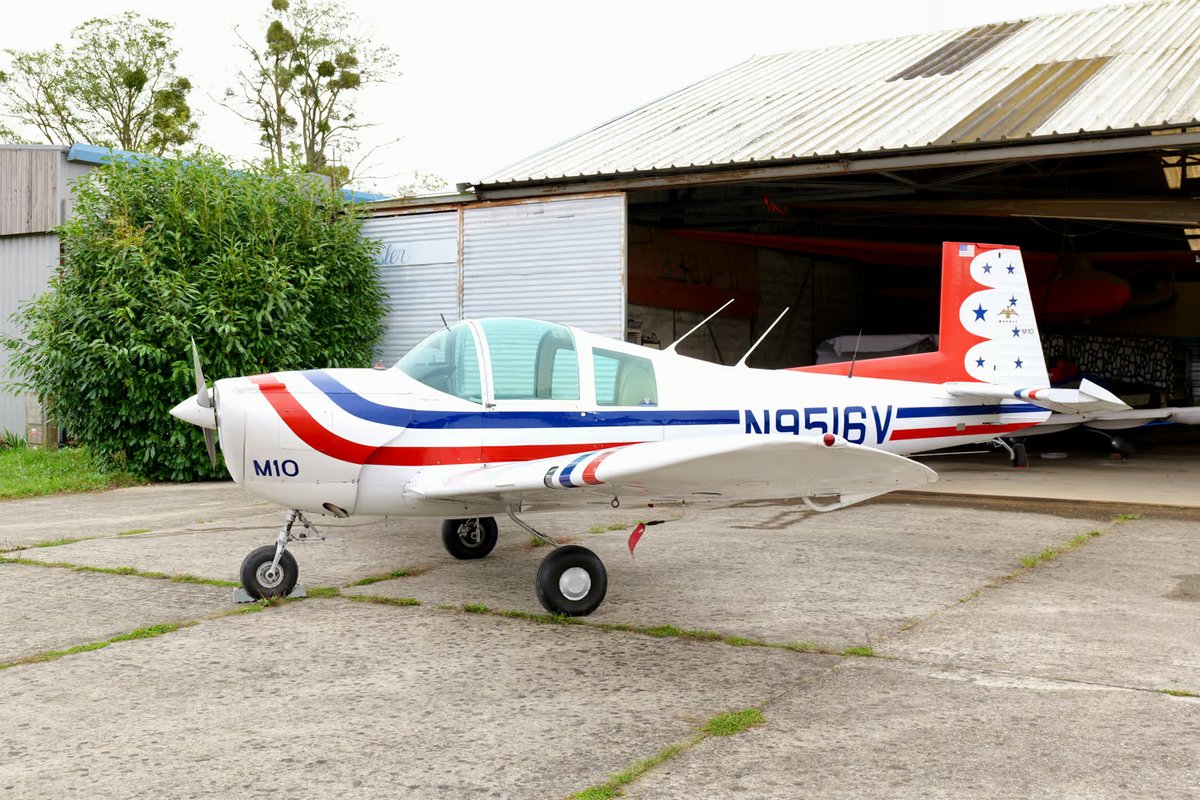
What a Mooney M-10 Cadet costs, how far it flies, and what it costs to keep
PlaneFox tracks 1 Mooney M-10 Cadet aircraft for sale and re-reads every one of them from the broker and dealer sites it watches, so the figures below move when the market moves. Every number on this page is measured from those live listings, not taken from a published price guide.
How far can a Mooney M-10 Cadet fly?
A Mooney M-10 Cadet flies about 484 nm, roughly 896 km, which is about 5 h 3 min in still air at typical cruise.
What does a Mooney M-10 Cadet cost to own?
A Mooney M-10 Cadet costs about EUR 1,312 a month to run, or about EUR 130 for every flight hour when it is flown 150 hours a year.
More questions about the Mooney M-10 Cadet
How much does a Mooney M-10 Cadet cost?
What is the price range for a used Mooney M-10 Cadet?
How many Mooney M-10 Cadet aircraft are for sale right now?
Where can I find a Mooney M-10 Cadet for sale?
What should I check when buying a used Mooney M-10 Cadet?
About the Mooney M-10 Cadet
Aircraft overview
The Mooney M-10 Cadet is a two seat, low wing light aircraft built by Mooney Aircraft in 1969 and 1970 after Mooney acquired the Alon line, itself developed from the ERCO Ercoupe. It was intended primarily for training and economical personal flying, not as a member of the faster retractable gear Mooney M20 family. The M-10 Cadet matters because it represents a distinct, short lived branch of Mooney history: a simple fixed gear trainer with Ercoupe ancestry, conventional rudder pedals, a single vertical tail and Mooney branding.
Performance & specifications
Typical performance is modest and appropriate to a 90 hp trainer. The M-10 Cadet is commonly associated with cruise speeds around 90 to 100 mph, roughly 78 to 87 knots, depending on aircraft condition, propeller, loading and operating technique. Published range figures are generally in the 300 to 350 nautical mile class. Gross weight is about 1,450 lb, with useful load commonly around the mid 500 lb range. Service ceiling is typically listed near 13,000 feet. The standard powerplant is the Continental C90 series, rated at 90 hp, driving a fixed pitch propeller.
Cabin & avionics
The cabin seats two side by side under a sliding canopy, with compact dimensions typical of its Ercoupe derived design. Visibility is a notable strength, while baggage capacity and shoulder room are limited compared with later four seat trainers. Buyers should not expect factory glass avionics such as Garmin Perspective or Garmin G1000. Original aircraft were delivered with basic analog flight instruments and simple radios. Used examples may have upgraded VHF comms, transponders, ADS-B Out equipment, intercoms, engine instruments or panel mounted GPS units, but installations vary widely.
Buying & value
On the used market, the Mooney M-10 Cadet occupies a niche position below faster Mooney models and alongside vintage two seat trainers. Its appeal is simplicity, low fuel burn and rarity, rather than speed or load carrying ability. Pre purchase attention should focus on airframe corrosion, canopy condition, landing gear attachment points, control rigging, fuel system condition, brake parts, engine compressions and logbook continuity. Parts support can require more research than for mainstream Cessna or Piper trainers, because production numbers were low. Common upgrades include modern radios, ADS-B compliance, shoulder harnesses, improved engine monitoring and interior refurbishment. Condition, documentation and quality of maintenance usually matter more than cosmetic originality.