Pilatus P3 for Sale
What a Pilatus P3 costs, how far it flies, and what it costs to keep
PlaneFox tracks 2 Pilatus P3 aircraft for sale and re-reads every one of them from the broker and dealer sites it watches, so the figures below move when the market moves. Every number on this page is measured from those live listings, not taken from a published price guide.
How far can a Pilatus P3 fly?
A Pilatus P3 flies about 405 nm, roughly 750 km, which is about 2 h 59 min in still air at typical cruise.
What does a Pilatus P3 cost to own?
A Pilatus P3 costs about EUR 2,096 a month to run, or about EUR 224 for every flight hour when it is flown 150 hours a year.
More questions about the Pilatus P3
How much does a Pilatus P3 cost?
What is the price range for a used Pilatus P3?
How many Pilatus P3 aircraft are for sale right now?
Where can I find a Pilatus P3 for sale?
What should I check when buying a used Pilatus P3?
About the Pilatus P3
Aircraft overview
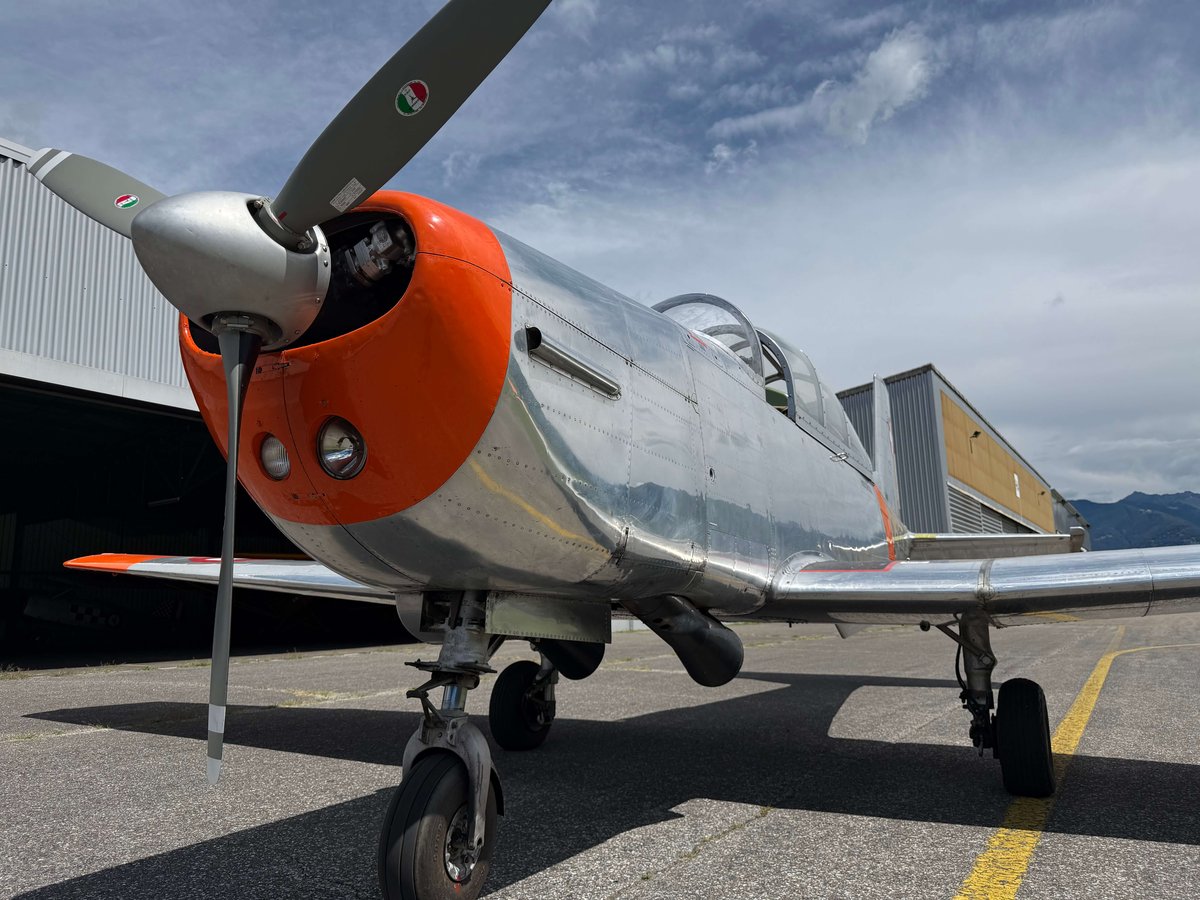
The Pilatus P3 is a Swiss two seat piston trainer developed by Pilatus Aircraft for military pilot training. The prototype first flew in 1953, with production aircraft delivered mainly in the mid to late 1950s. It served with the Swiss Air Force and was also operated by the Brazilian Navy. The type matters in the used aircraft market because it offers genuine military trainer handling, tandem seating and retractable landing gear in a comparatively simple piston airframe, distinct from later Pilatus turbine trainers and from the PC series utility aircraft.
Performance & specifications
The Pilatus P3 is powered by a Lycoming GO 435 C2A2 geared, air cooled six cylinder piston engine rated at about 240 hp. Typical cruise performance is commonly quoted around 130 to 140 knots, depending on propeller, weight, engine condition and operating technique. Published range is in the region of 400 nautical miles, while service ceiling is about 18,000 feet. Maximum takeoff weight is approximately 3,400 lb, with useful load commonly around 900 to 1,000 lb depending on individual equipment, fuel, radios and civil modifications. The aircraft has a low wing layout, retractable tricycle landing gear and aerobatic trainer roots, so condition of the gear system and control rigging is particularly relevant.
Cabin & avionics
The cabin is a tandem cockpit under a clear canopy, with the student or front occupant seated ahead of the instructor or rear occupant. Visibility is a major part of the aircraft’s appeal, although access, noise levels and ventilation reflect 1950s military trainer design rather than modern touring aircraft standards. There is no factory glass cockpit suite such as Garmin Perspective or G1000. Most surviving civil aircraft have conventional analog flight instruments, with owner installed radios, transponders, ADS B equipment, GPS navigators or engine monitors varying widely from aircraft to aircraft.
Buying & value
Prospective buyers should treat each Pilatus P3 as an individual warbird or classic trainer rather than a standardized general aviation model. Important checks include engine history, gearbox and propeller status, retractable landing gear condition, corrosion inspection, canopy condition, fuel system integrity, brake parts availability and the quality of any civil certification or restoration work. Upgrades often include modern radios, GPS, ADS B, improved intercoms and refreshed panels, while originality may also carry value for collectors. In the used market, the Pilatus P3 typically sits between common two seat civilian trainers and more complex or higher cost turbine military trainers.