Boeing 727 for Sale
What a Boeing 727 costs, how far it flies, and what it costs to keep
PlaneFox tracks 1 Boeing 727 aircraft for sale and re-reads every one of them from the broker and dealer sites it watches, so the figures below move when the market moves. Every number on this page is measured from those live listings, not taken from a published price guide.
How far can a Boeing 727 fly?
A Boeing 727 flies about 2,171 nm, roughly 4,021 km, which is about 4 h 2 min in still air at typical cruise.
More questions about the Boeing 727
How much does a Boeing 727 cost?
What is the price range for a used Boeing 727?
How many Boeing 727 aircraft are for sale right now?
Where can I find a Boeing 727 for sale?
What should I check when buying a used Boeing 727?
About the Boeing 727
Aircraft overview
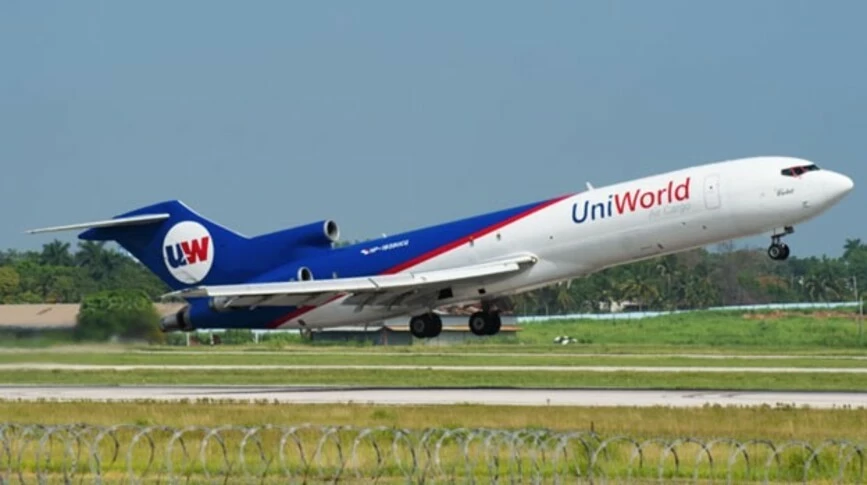
The Boeing 727 is a three engine, narrow body jet airliner developed by Boeing for short and medium haul routes from airports that could not always support larger first generation jets. The prototype first flew in 1963, and production ran from 1963 to 1984, with 1,832 aircraft built. Its defining features are the rear mounted Pratt & Whitney JT8D engines, a T tail, high lift wing devices and an integral rear airstair. The type matters because it brought jet service to smaller airports and later became a major freighter platform, especially after passenger operators moved to newer twinjets.
Performance & specifications
Typical cruise speed is about 460 to 470 knots, depending on weight, altitude and engine fit. Range varies substantially by variant and configuration: a 727-100 is generally shorter legged, while a 727-200 Advanced can cover roughly 2,000 nautical miles in airline service conditions. Service ceiling is 42,000 feet. Maximum payload is commonly in the 40,000 to 46,000 lb class, with freighter conversions often optimized for dense express cargo. Power comes from three Pratt & Whitney JT8D low bypass turbofan engines, with later aircraft and hush kit programs addressing noise compliance rather than changing the fundamental engine family.
Cabin & avionics
Passenger layouts typically seated about 106 to 131 passengers in the 727-100 and around 134 to 189 in the longer 727-200, depending on galley, lavatory and class configuration. Many surviving examples are freighters, executive conversions or special mission aircraft rather than standard airline cabins. The cockpit was designed for a three person crew: captain, first officer and flight engineer. Original avionics are analog, not Garmin Perspective or G1000 class systems. Buyer relevant upgrades often include modern radios, transponders, GPS or FMS navigation, TCAS, EGPWS, weather radar updates, cockpit voice and flight data recorder compliance, and RVSM capability where applicable.
Buying & value
The Boeing 727 used market is specialized. Most candidates require close review of maintenance status, engine time, JT8D parts support, corrosion, landing gear life, cargo door modifications, structural inspections and noise compliance. Common variants include the 727-100, 727-100C convertible, 727-200 and 727-200 Advanced, with many aircraft converted to freighter or VIP use. Hush kits, avionics modernization and cargo conversion quality can materially affect value. Compared with newer Boeing 737 or Airbus A320 family aircraft, the 727 usually trades as a niche asset, valued for payload capability, runway performance, existing freighter infrastructure and specific mission fit rather than fuel efficiency or broad airline demand.