Dassault Falcon 50 for Sale
MC-Planes GB-250N project
€4,500
EDQW, Germany

2006 Dassault Falcon 50EX
$6,150,000
jet
1984 Dassault Falcon 50
Contact for Price
Aeromanagement Group, US/Italy
jet
1995 Dassault Falcon 50EX-Dash 4
$750,000
Scottsdale, Arizona
jetBombardierChallenger 850
Contact for Price
2025
Contact for Price
2019
Contact for Price
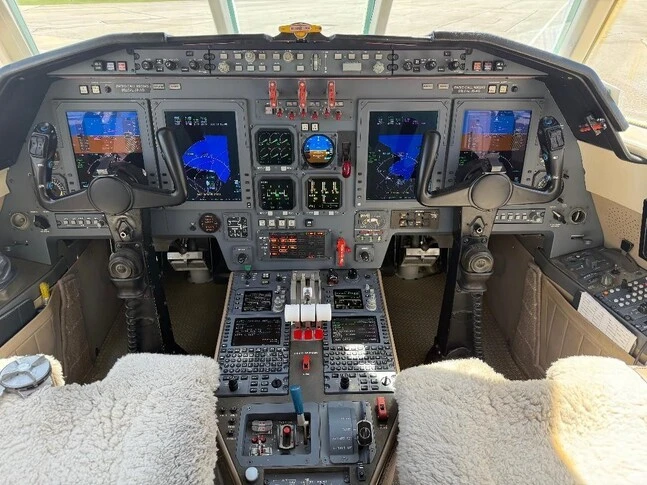
2000 DASSAULT FALCON 50EX
$4,595,000
Spring, Texas
jet
2003 DASSAULT FALCON 50EX
Price on Request
Addison, Texas
jet
Aircraft Technologies Inc Dewald Sunny Sport
$7,505
Switzerland, Kreuzlingen
single-engine
Aerosport SILA 450 C
€59,000
Gap-Tallard LFNA, France
single-engine2006
Contact for Price
1974 Varga Aircraft Corp 2150A
Contact for Price
Garmin GTN 750
$4,150
1994 Unbekannt / Unknown ASO Storch 503 CT
€19,000
Bad Hersfeld EDEN, Deutschland
ultralight1990 DASSAULT FALCON 50
Contact for Price
Atlanta (KRYY)
jet1994 DASSAULT FALCON 50
Contact for Price
Indianapolis
jet1994 DASSAULT FALCON 50
Contact for Price
Horseshoe Bay (KDZB)
jet1995 DASSAULT FALCON 50
$3,195,000
Canton (KCNI)
jetWhat a Dassault Falcon 50 costs, how far it flies, and what it costs to keep
PlaneFox tracks 19 Dassault Falcon 50 aircraft for sale and re-reads every one of them from the broker and dealer sites it watches, so the figures below move when the market moves. Every number on this page is measured from those live listings, not taken from a published price guide.
How much does a Dassault Falcon 50 cost?
There are 19 Dassault Falcon 50 listings on PlaneFox right now, 7 of them priced. They ask between EUR 7,000 and EUR 5,490,000, with a median of EUR 670,000.
How far can a Dassault Falcon 50 fly?
A Dassault Falcon 50 flies about 3,200 nm, roughly 5,926 km, which is about 7 h 21 min in still air at typical cruise.
What does a Dassault Falcon 50 cost to own?
A Dassault Falcon 50 costs about EUR 70,386 a month to own and fly: EUR 65,425 to run it, plus EUR 4,961 for a loan over 15 years on the median asking price here, EUR 670,062. Flown 150 hours a year, that is about EUR 2,882 for every flight hour.
More questions about the Dassault Falcon 50
How much does a Dassault Falcon 50 cost?
What is the price range for a used Dassault Falcon 50?
How many Dassault Falcon 50 aircraft are for sale right now?
Where can I find a Dassault Falcon 50 for sale?
What should I check when buying a used Dassault Falcon 50?
About the Dassault Falcon 50
Aircraft overview
The Dassault Falcon 50 is a French long range business jet developed by Dassault Aviation as a three engine derivative of the Falcon family. It first flew in 1976, entered service around 1980 and remained in production in its original Falcon 50 form until the mid 1990s, before the improved Falcon 50EX followed. Its importance in the used market comes from its combination of transatlantic range, relatively compact airport footprint and the safety and performance characteristics of a trijet layout.
Performance & specifications
Typical high speed cruise is about 459 knots, with long range cruise commonly planned below that for fuel efficiency. Published range is approximately 3,000 nautical miles, depending on payload, reserves, wind and operating profile. The aircraft is certified to a service ceiling of 45,000 feet. Power comes from three Garrett, later Honeywell, TFE731 turbofan engines, specifically TFE731-3 series engines on the standard Falcon 50. Maximum takeoff weight is about 40,000 lb class, and useful load varies materially by interior, equipment and modification status, so current weight and balance data should be reviewed for each aircraft.
Cabin & avionics
The Falcon 50 cabin is typically configured for 8 to 9 passengers, often with a forward galley, club seating, a conference or divan section and an enclosed aft lavatory. Cabin dimensions are generous for its era, with a nearly stand-up cabin and a flat floor, making it suitable for medium and long stage lengths. Original aircraft were delivered with analog and early integrated avionics, commonly based around Collins equipment rather than modern Garmin Perspective or G1000 suites. Many used examples have since received upgrades such as electronic flight displays, FMS modernization, GPS, TCAS, EGPWS, ADS-B Out and RVSM compliance.
Buying & value
For buyers, the Falcon 50 should be evaluated by engine program status, TFE731 remaining times, major inspection history, landing gear status, corrosion findings, fuel system condition, avionics compliance and documented weight changes after cabin refurbishment. Important distinctions include the original Falcon 50 and the later Falcon 50EX, which uses newer engines and updated avionics and is valued differently. On current PlaneFox used-market data, asking prices average around EUR 3,720,000, with observed listings from about EUR 1,550,000 to EUR 5,610,000. In the pre-owned market, the Falcon 50 typically appeals to buyers seeking proven long range capability at a lower acquisition cost than newer large cabin jets, while accepting higher age-related maintenance oversight.