Pipistrel Sinus for Sale
Pipistrel Sinus
€84,900
LFRV, France
ultralightPipistrel Sinus
€80,000
Piemonte, Italy
ultralight
2002 PIPISTREL Sinus
€69,000
ultralight
2012 Pipistrel Sinus
€87,000
Germany
ultralight
2010 Pipistrel Sinus
€87,000
Germany
ultralight
2001 PIPISTREL Sinus
€95,000
ultralightPipistrel Sinus project
Contact for Price
Ptolemaida, Greece
ultralightPipistrel Sinus Max
€70,000
Golędzinów, Poland
ultralight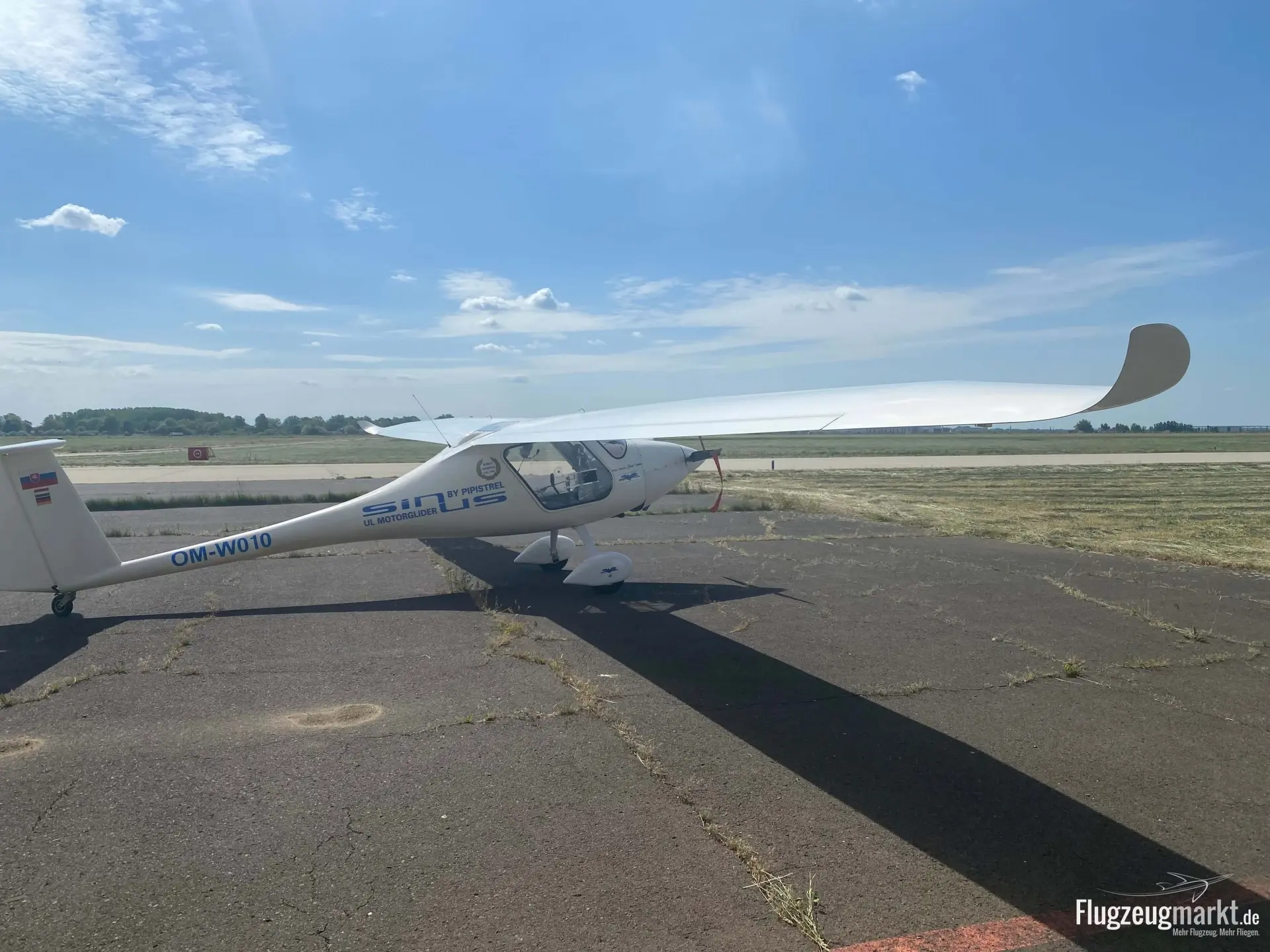
Pipistrel Sinus 912
€72,500
Debrecen
ultralight
Pipistrel - Sinus ,Rotax 912 Pipistrel Sinus ,Rotax 912
€69,000
ultralight2006 Pipistrel SINUS 912
Contact for Price
ultralight2024 PIPISTREL SINUS FLEX
$168,000
Las Vegas
ultralight2011 PIPISTREL SINUS
Contact for Price
Hollister
ultralight2024 PIPISTREL SINUS FLEX
$179,000
Fort Wayne
ultralightWhat a Pipistrel Sinus costs, how far it flies, and what it costs to keep
PlaneFox tracks 14 Pipistrel Sinus aircraft for sale and re-reads every one of them from the broker and dealer sites it watches, so the figures below move when the market moves. Every number on this page is measured from those live listings, not taken from a published price guide.
How much does a Pipistrel Sinus cost?
There are 14 Pipistrel Sinus listings on PlaneFox right now, 11 of them priced. They ask between EUR 69,000 and EUR 160,000, with a median of EUR 85,000.
How far can a Pipistrel Sinus fly?
A Pipistrel Sinus flies about 770 nm, roughly 1,426 km, which is about 7 h 42 min in still air at typical cruise.
What does a Pipistrel Sinus cost to own?
A Pipistrel Sinus costs about EUR 1,470 a month to own and fly: EUR 842 to run it, plus EUR 629 for a loan over 15 years on the median asking price here, EUR 84,900. Flown 150 hours a year, that is about EUR 91 for every flight hour.
More questions about the Pipistrel Sinus
How much does a Pipistrel Sinus cost?
What is the price range for a used Pipistrel Sinus?
How many Pipistrel Sinus aircraft are for sale right now?
Where can I find a Pipistrel Sinus for sale?
What should I check when buying a used Pipistrel Sinus?
How do Pipistrel Sinus prices change with year of manufacture?
About the Pipistrel Sinus
Aircraft overview
The Pipistrel Sinus is a two seat, side by side light motorglider built by Pipistrel in Slovenia. The type first flew in the mid 1990s and entered production as one of the company’s defining early models, combining ultralight operating costs with genuine soaring capability. Unlike the shorter wing Pipistrel Virus, the Pipistrel Sinus uses a long, high aspect ratio wing of about 49 feet, giving it efficient glide performance as well as practical cross country ability under power. It is commonly found in European ultralight, microlight and light sport categories, depending on national certification and maximum takeoff weight.
Performance & specifications
Typical Pipistrel Sinus performance depends on engine, propeller, weight limit and local certification, but the aircraft is generally associated with economical cruise speeds around 100 to 110 knots. Published range figures for Rotax powered examples can be in the region of 700 to 800 nautical miles when equipped for long range operation. Maximum takeoff weights vary by regulatory category, commonly around 992 lb, 1,042 lb or higher for later certified configurations, so useful load must be checked aircraft by aircraft. Power is typically supplied by a Rotax 912 series engine, most often the 80 hp 912 UL or 100 hp 912 ULS. The type is capable of high altitude operation for its class, with published ceilings varying by model and equipment.
Cabin & avionics
The cabin seats two occupants side by side under a large clear canopy, with good outward visibility and a compact cockpit typical of European composite light aircraft. Baggage capacity is modest and should be evaluated together with fuel and occupant weight, especially on lower weight category aircraft. Avionics are highly individual on the used market. Earlier Pipistrel Sinus aircraft often have simple VFR panels with analog flight instruments, engine monitoring, radio and transponder. Later or upgraded examples may feature glass displays from suppliers such as Dynon, Kanardia or Garmin, but Garmin Perspective and G1000 installations are not typical for this model.
Buying & value
Buyers should verify the exact regulatory status, maximum takeoff weight, engine model, propeller type, maintenance history and any factory service bulletins. Composite condition, canopy condition, control rigging, landing gear wear and parachute system age are important inspection points. Common distinctions include 80 hp versus 100 hp Rotax power, fixed or variable pitch propellers where permitted, long range fuel options, updated avionics and ballistic recovery parachute installations. In the used market, the Pipistrel Sinus is positioned as an efficient touring motorglider rather than a conventional trainer. Current PlaneFox listing data shows an average asking price of about EUR 95,000, with examples ranging from roughly EUR 69,000 to EUR 154,000 depending on year, equipment and condition.