Beechcraft King Air 300 / 350 for Sale

1989 Beechcraft King Air 300
Contact for Price
Bromma, Stockholm, Sweden
turboprop
1997 Beechcraft King Air 350 (B300)
$2,999,000
turboprop
Beechcraft King Air 300
Contact for Price
Brazil
turboprop
2000 Beechcraft Super King Air 350
Price on Request
Brazil
turboprop2005 BEECHCRAFT KING AIR 350
Contact for Price
Greer, South Carolina
turboprop1993 BEECHCRAFT KING AIR 300-LW
Contact for Price
Jacksonville, Texas
turboprop2015 BEECHCRAFT KING AIR 350I
Contact for Price
Boca Raton, Florida
turboprop1987 BEECHCRAFT KING AIR 300
Contact for Price
Waycross (AYS/KAYS)
turboprop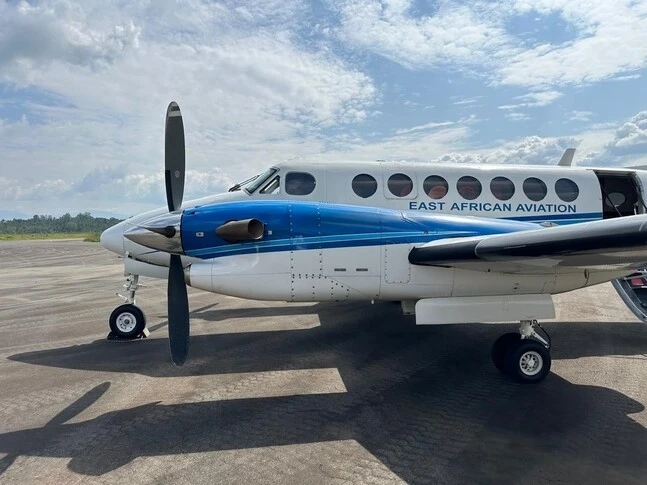
1999 BEECHCRAFT KING AIR 350
$2,695,000
Southern Africa, South Africa
turbopropNot Listed BEECHCRAFT KING AIR 300
Contact for Price
Fort Lauderdale
turboprop2000 BEECHCRAFT KING AIR 350
$3,900,000
Tucson (KTUS)
turbopropWhat a Beechcraft King Air 300 / 350 costs, how far it flies, and what it costs to keep
PlaneFox tracks 11 Beechcraft King Air 300 / 350 aircraft for sale and re-reads every one of them from the broker and dealer sites it watches, so the figures below move when the market moves. Every number on this page is measured from those live listings, not taken from a published price guide.
How far can a Beechcraft King Air 300 / 350 fly?
A Beechcraft King Air 300 / 350 flies about 1,806 nm, roughly 3,345 km, which is about 5 h 47 min in still air at typical cruise.
What does a Beechcraft King Air 300 / 350 cost to own?
A Beechcraft King Air 300 / 350 costs about EUR 32,750 a month to run, or about EUR 1,695 for every flight hour when it is flown 150 hours a year.
More questions about the Beechcraft King Air 300 / 350
How much does a Beechcraft King Air 300 / 350 cost?
What is the price range for a used Beechcraft King Air 300 / 350?
How many Beechcraft King Air 300 / 350 aircraft are for sale right now?
Where can I find a Beechcraft King Air 300 / 350 for sale?
What should I check when buying a used Beechcraft King Air 300 / 350?
About the Beechcraft King Air 300 / 350
Aircraft overview
The Beechcraft King Air 300 / 350 is a pressurized twin turboprop business aircraft from Beechcraft, developed from the King Air 200 line but certified as the larger Model 300 and B300 family. The King Air 300 entered service in the mid 1980s, while the stretched King Air 350 followed in 1990 and remains the basis for current production King Air models. It matters in the used market because it combines turbine reliability, short runway capability, a stand up cabin and lower operating complexity than many light jets.
Performance & specifications
Typical high speed cruise is about 310 to 312 knots, depending on weight, altitude and configuration. The King Air 350 has a maximum range commonly quoted at around 1,800 nautical miles under long range conditions, with real mission planning affected by reserves, payload and weather. Certified ceiling is 35,000 feet. The King Air 300 uses two Pratt & Whitney Canada PT6A 60A turboprops rated at 1,050 shp each, the same basic power rating used on the King Air 350. Maximum takeoff weight is 14,000 lb for the King Air 300 and 15,000 lb for the King Air 350. Useful load varies by aircraft equipment, but the type is valued for carrying passengers, bags and fuel without the payload compromises common in smaller cabin turboprops.
Cabin & avionics
The King Air 300 typically seats about 6 to 8 passengers, while the King Air 350 cabin is longer and commonly arranged for 8 to 9 passengers, with higher density layouts possible. The 350 added cabin length and additional windows, improving cabin comfort on executive, shuttle, medevac and special mission aircraft. Early aircraft are usually found with Collins Pro Line II avionics. Later King Air 350 and 350i aircraft often have Rockwell Collins Pro Line 21, while newer 360 series aircraft use Collins Fusion. Many used examples have received avionics updates, including Garmin G1000 NXi conversions, ADS B, WAAS and modern engine monitoring.
Buying & value
Buyers should compare total time, engine and propeller status, damage history, corrosion inspections, avionics standard, interior age and compliance with service bulletins or airworthiness directives. Common value drivers include Raisbeck performance modifications, BLR winglets, Blackhawk engine upgrades on eligible aircraft, Pro Line 21 or Garmin modernization, and the distinction between a King Air 300, King Air 350, 350i, 350ER or later 360. In current PlaneFox listing data, asking prices average about EUR 3,620,000, with examples ranging from about EUR 1,050,000 to EUR 7,500,000, reflecting age, variant, equipment and maintenance position.