Beechcraft Premier for Sale

2005 Premier Premier 1
$1,400,000
jetRaytheon 390 Premier 1
$1,700,000
Amsterdam, Netherlands
jet
Beechcraft Premier I
Contact for Price
jet
2003 Beechcraft Premier I
Contact for Price
jet
Beechcraft Premier 1A
Contact for Price
Germany
jet
Beechcraft Premier A
Contact for Price
jet
2012 Hawker Beechcraft Premier 1A
Contact for Price
London
jet
Premiere 1A
Contact for Price
jet
Beechcraft Premier 1A
Contact for Price
Netherlands, Amsterdam, EHAM
jetBeechcraft Premier I
Contact for Price
India, Bangalore
jet
Raytheon - Premier I Raytheon Premier I
Price on Request
jet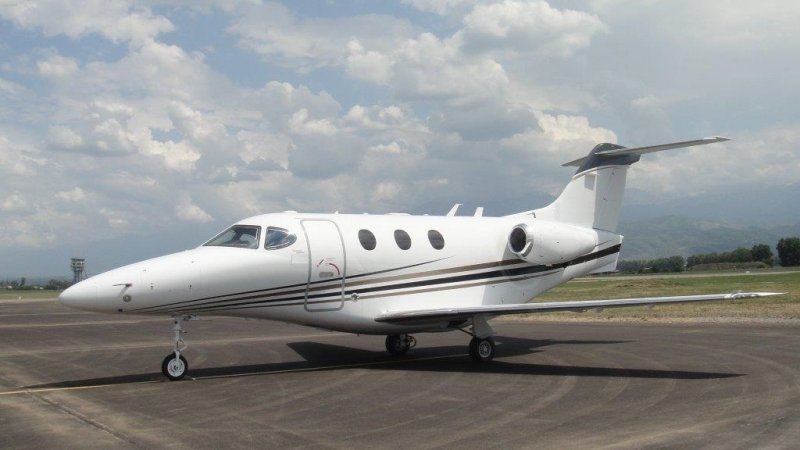
Raytheon - Premier IA Raytheon Premier IA
Price on Request
jet2002
Contact for Price
What a Beechcraft Premier costs, how far it flies, and what it costs to keep
PlaneFox tracks 13 Beechcraft Premier aircraft for sale and re-reads every one of them from the broker and dealer sites it watches, so the figures below move when the market moves. Every number on this page is measured from those live listings, not taken from a published price guide.
How far can a Beechcraft Premier fly?
A Beechcraft Premier flies about 1,430 nm, roughly 2,648 km, which is about 3 h 9 min in still air at typical cruise.
What does a Beechcraft Premier cost to own?
A Beechcraft Premier costs about EUR 41,601 a month to run, or about EUR 2,041 for every flight hour when it is flown 150 hours a year.
More questions about the Beechcraft Premier
How much does a Beechcraft Premier cost?
What is the price range for a used Beechcraft Premier?
How many Beechcraft Premier aircraft are for sale right now?
Where can I find a Beechcraft Premier for sale?
What should I check when buying a used Beechcraft Premier?
About the Beechcraft Premier
Aircraft overview
The Beechcraft Premier is a light business jet developed by Raytheon Aircraft, later Beechcraft, to offer jet speed with a cabin larger than many aircraft in its weight class. The Premier I first flew in 1998, received certification in 2001, and was followed by the refined Premier IA from 2006. Production ended in the early 2010s. Its most distinctive engineering feature is a carbon fiber composite fuselage mated to a conventional aluminum wing, a combination intended to maximize cabin volume while keeping weight within the light jet category.
Performance & specifications
Typical cruise performance is around 450 knots at higher altitudes, with a maximum operating altitude of 41,000 feet. Published range varies with payload, reserves and operating assumptions, but the Premier is generally considered a roughly 1,300 nautical mile aircraft in practical planning. Power comes from two Williams International FJ44-2A turbofan engines, each rated at about 2,300 pounds of thrust. Maximum takeoff weight is 12,500 pounds, with useful load typically around 3,000 pounds depending on equipment and configuration. Buyers should evaluate full fuel payload carefully, as it is a meaningful operating factor in this class.
Cabin & avionics
The cabin is one of the Premier’s main differentiators. It commonly seats six passengers in the cabin, often with a club arrangement and an aft belted lavatory available on many layouts. The composite fuselage gives the aircraft a comparatively wide and tall cabin for a light jet, with a flat floor and good shoulder room. Avionics are typically Rockwell Collins Pro Line 21, not Garmin G1000 or Garmin Perspective. Equipment varies by year and retrofit history, so WAAS LPV capability, ADS-B compliance, charting, weather display options and software status should be reviewed aircraft by aircraft.
Buying & value
Used market choices are mainly the Premier I and Premier IA. The IA brought cabin refinements, systems updates and avionics improvements, and it usually commands a premium over early Premier I examples. Key pre-purchase items include engine program status, FJ44 maintenance history, landing gear cycles, compliance with service bulletins, avionics upgrade records, pressurization and environmental system condition, and the state of the composite fuselage and windows. The Premier often appeals to buyers comparing late model turboprops, very light jets and other light jets, offering strong speed and cabin space with operating economics and support considerations that should be examined in detail.