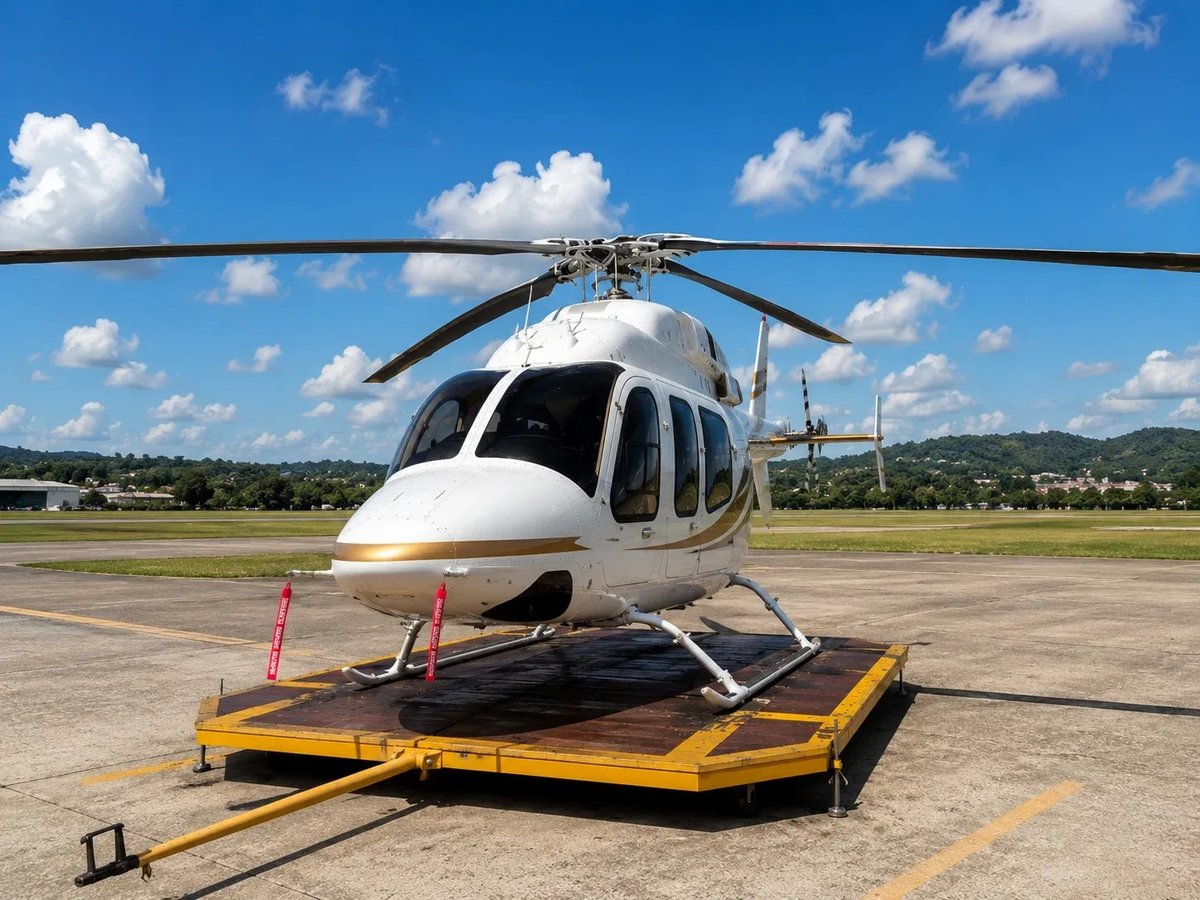


What a Bell 429 costs, how far it flies, and what it costs to keep
PlaneFox tracks 4 Bell 429 aircraft for sale and re-reads every one of them from the broker and dealer sites it watches, so the figures below move when the market moves. Every number on this page is measured from those live listings, not taken from a published price guide.
How far can a Bell 429 fly?
A Bell 429 flies about 411 nm, roughly 761 km, which is about 2 h 44 min in still air at typical cruise.
What does a Bell 429 cost to own?
A Bell 429 costs about EUR 18,873 a month to run, or about EUR 1,510 for every flight hour when it is flown 150 hours a year.
More questions about the Bell 429
How much does a Bell 429 cost?
What is the price range for a used Bell 429?
How many Bell 429 aircraft are for sale right now?
Where can I find a Bell 429 for sale?
What should I check when buying a used Bell 429?
About the Bell 429
Aircraft overview
The Bell 429 is a light twin engine helicopter built by Bell, developed for corporate transport, emergency medical services, law enforcement, utility work and offshore support. It first flew in 2007 and received initial certification in 2009, with production continuing today. The aircraft matters in the used market because it combines a modern twin engine safety profile, a relatively large cabin for its class, IFR capability and mission flexibility without moving into a medium helicopter size category.
Performance & specifications
Typical cruise speed is around 150 knots, with a published maximum range of about 400 nautical miles depending on configuration, fuel, reserve policy and payload. The Bell 429 is powered by two Pratt & Whitney Canada PW207D1 turboshaft engines with dual channel FADEC. Maximum takeoff weight is commonly listed at 7,000 lb, while some markets and configurations use an increased gross weight of 7,500 lb where approved. Useful load varies significantly by equipment fit, but is generally in the light twin class at roughly 2,500 lb or more. The service ceiling is published at 20,000 feet.
Cabin & avionics
The cabin is one of the Bell 429’s main distinguishing points. It has a flat floor, wide side doors and a rear clamshell door arrangement that is especially valuable for EMS, utility loading and law enforcement equipment access. Typical layouts include one or two pilots and up to seven passengers, with club seating common in executive aircraft. EMS interiors usually trade seats for stretcher and medical equipment installations.
Avionics are centered on the Bell BasiX-Pro integrated glass cockpit, typically with multiple large displays, engine and systems monitoring, GPS navigation, weather and optional autopilot functions. Buyers should confirm the exact avionics standard, IFR approval, autopilot configuration, NVG compatibility and any later software or display upgrades.
Buying & value
On the used market, the Bell 429 typically sits above older light twins in acquisition cost, but below larger medium twins. Value is driven by total time, engine and dynamic component remaining life, maintenance program status, avionics standard, interior condition and mission equipment. Important variants and configurations include skid gear aircraft, the Bell 429WLG with retractable wheeled landing gear, EMS completions, corporate interiors, hoist equipped aircraft, flotation gear, cargo hook installations and auxiliary fuel options.
Pre purchase review should focus on complete logbooks, compliance with service bulletins and airworthiness directives, corrosion exposure, damage history, component life limits and whether specialized equipment is certified and transferable for the buyer’s intended operation.