
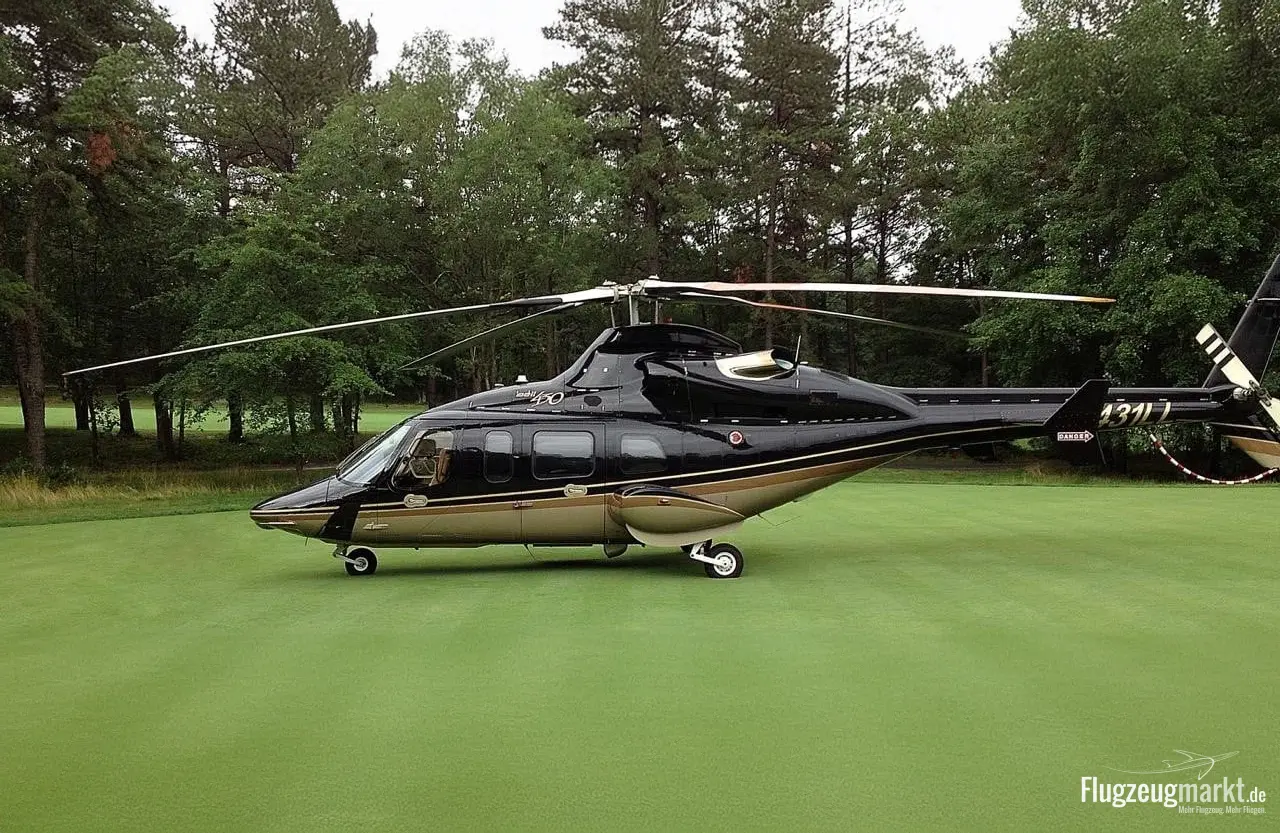
What a Bell 430 costs, how far it flies, and what it costs to keep
PlaneFox tracks 2 Bell 430 aircraft for sale and re-reads every one of them from the broker and dealer sites it watches, so the figures below move when the market moves. Every number on this page is measured from those live listings, not taken from a published price guide.
How far can a Bell 430 fly?
A Bell 430 flies about 324 nm, roughly 600 km, which is about 2 h 19 min in still air at typical cruise.
What does a Bell 430 cost to own?
A Bell 430 costs about EUR 17,559 a month to run, or about EUR 1,405 for every flight hour when it is flown 150 hours a year.
More questions about the Bell 430
How much does a Bell 430 cost?
What is the price range for a used Bell 430?
How many Bell 430 aircraft are for sale right now?
Where can I find a Bell 430 for sale?
What should I check when buying a used Bell 430?
About the Bell 430
Aircraft overview
The Bell 430 is a twin engine, intermediate class helicopter developed by Bell Helicopter as a larger and more capable successor to the Bell 230. It first flew in 1994, received certification in 1996, and remained in production until 2008. The model is notable for combining a stretched cabin, a four blade composite main rotor, and retractable wheeled landing gear in a civil IFR capable platform. It has been used for corporate transport, air medical operations, utility missions, and government service.
Performance & specifications
Typical Bell 430 performance includes cruise speeds in the 135 to 145 knot range, with published maximum cruise figures around 150 knots depending on weight, configuration, and conditions. Maximum range is commonly cited at about 350 nautical miles with standard fuel. The aircraft has a maximum takeoff weight of 9,300 lb and a useful load generally above 3,000 lb, subject to equipment fit and interior. Service ceiling is listed at 20,000 feet. Power comes from two Rolls Royce 250 C40B turboshaft engines, each rated at approximately 783 shp for takeoff.
Cabin & avionics
The Bell 430 cabin is wider and longer than earlier Bell 222 and 230 models, with typical executive layouts seating six passengers and utility or air medical layouts varying by mission equipment. The flat floor, large side doors, and relatively quiet four blade rotor system are important cabin features. Avionics vary significantly across the fleet. Many aircraft were delivered with conventional IFR panels using Collins or Bendix King radios, radar altimeter, weather radar options, and an autopilot or stability augmentation system. Later upgrades often add Garmin GPS, modern transponders, traffic awareness, terrain awareness, satellite communications, or digital engine monitoring.
Buying & value
Used Bell 430 buyers should review engine times, rotor component life limits, landing gear condition, corrosion history, avionics status, and compliance with Bell service bulletins and airworthiness directives. Mission equipment can strongly affect value, especially EMS interiors, executive completions, hoists, wire strike protection, and modern navigation upgrades. The Bell 430 occupies a niche between lighter twin helicopters and larger medium twins, offering cabin space and twin engine redundancy without the acquisition cost of newer designs. Parts support, component reserves, and operator familiarity are central to valuation because production ended in 2008 and fleet size is limited.