Extra Aircraft EA 200 for Sale
What a EA 200 costs, how far it flies, and what it costs to keep
PlaneFox tracks 2 EA 200 aircraft for sale and re-reads every one of them from the broker and dealer sites it watches, so the figures below move when the market moves. Every number on this page is measured from those live listings, not taken from a published price guide.
How far can a Extra Aircraft EA 200 fly?
A Extra Aircraft EA 200 flies about 270 nm, roughly 500 km, which is about 1 h 45 min in still air at typical cruise.
What does a Extra Aircraft EA 200 cost to own?
A Extra Aircraft EA 200 costs about EUR 1,830 a month to run, or about EUR 192 for every flight hour when it is flown 150 hours a year.
More questions about the EA 200
How much does a EA 200 cost?
What is the price range for a used EA 200?
How many EA 200 aircraft are for sale right now?
Where can I find a EA 200 for sale?
What should I check when buying a used EA 200?
About the Extra Aircraft EA 200
Aircraft overview
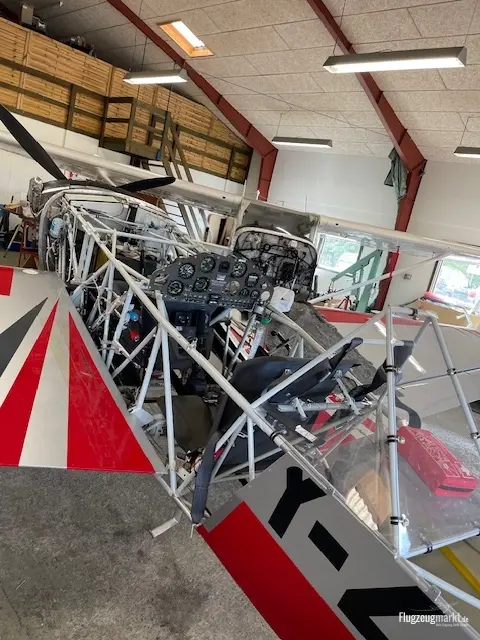
The Extra Aircraft EA 200 is a two-seat, tandem aerobatic aircraft built by Extra Flugzeugbau in Germany. It first appeared in the mid-1990s, with production beginning in 1996, and was conceived as a lower-powered, more accessible companion to the larger Extra 300 family. The EA 200 matters because it offers serious aerobatic capability in a certified, purpose-built airframe while using a 200 hp engine rather than the higher-output powerplants found in later competition models. For buyers, it is best understood as an advanced aerobatic trainer and sports aircraft, not as a touring machine.
Performance & specifications
Power comes from a Lycoming AEIO-360 series four-cylinder, fuel-injected aerobatic engine rated at 200 hp, driving a constant-speed propeller on most examples. Typical cruise figures are around 150 knots, depending on propeller, rigging and power setting. Published range is commonly cited at roughly 350 nautical miles, although practical endurance is strongly affected by aerobatic reserves and fuel planning. Maximum takeoff weight is about 1,870 lb, with useful load varying by equipment fit and aircraft history. Service ceiling is commonly listed around 16,000 feet. The EA 200 is approved for aerobatic operations, with high positive and negative load capability appropriate to its role.
Cabin & avionics
The cabin is a narrow tandem cockpit with the pilot positions arranged fore and aft under a clear canopy. Visibility is excellent for aerobatics, formation work and pattern flying, while baggage space and comfort are secondary considerations. Seating is for two, typically with full dual controls. Avionics are usually simple compared with modern cross-country aircraft. Many EA 200s have basic VFR panels with conventional flight instruments, radio, transponder and intercom. Upgrades may include compact Garmin or Trig avionics, electronic engine monitoring, ADS-B equipment or small-format electronic flight displays. Integrated suites such as Garmin G1000 or Garmin Perspective are not typical for the EA 200.
Buying & value
Condition and operating history matter more than cosmetic presentation. Buyers should review aerobatic usage, propeller and engine logs, hard landing history, control system condition, canopy fit, corrosion protection and compliance with service bulletins. Particular attention should be paid to the airframe, engine mounts, landing gear and any repairs following competition or training use. Common upgrades include modern radios, ADS-B, lightweight batteries, updated harnesses and propeller changes. On the used market, the EA 200 sits below higher-powered Extra 300 and 330 models, but above basic aerobatic trainers in capability and pedigree. Current PlaneFox listing data shows an average asking price around EUR 290,000, with listed aircraft at EUR 290,000.