Piper Twin Comanche for Sale
Piper PA-30 Turbo Twin Comanche
€229,000
EDHE, Germany
multi-engine1969 PlaneCheck shows many aircraft
Contact for Price
multi-enginePiper PA-30 Turbo Twin Comanche
Contact for Price
multi-engine1966 Piper PA30
€125,000
Paris, France
multi-engine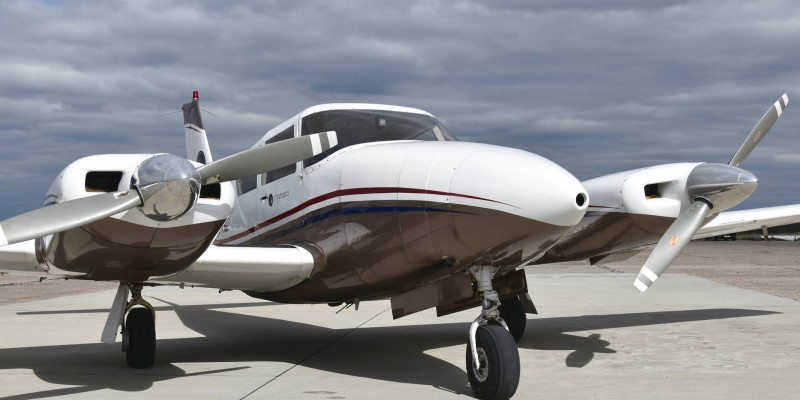
1963 Piper Piper PA-30 Twin Comanche
Price on Request
Poland
multi-engine1969 Piper PA30C Twin Comanche
$220,000
Sunshine Coast, Queensland, Australia
multi-engine1965 Piper Aircraft Corporation PA 30 Twin Comanche
€92,500
Güssing, Österreich
multi-engine1967 PIPER PA-30
Contact for Price
Colorado Springs
multi-engine1969 PIPER TWIN COMANCHE
$119,900
Lincoln Park
multi-engine1970 PIPER TWIN COMANCHE CR
$185,000
Platteville
multi-engine1964 PIPER PA-30
$139,999
Champaign
multi-engine1966 PIPER PA-30
Contact for Price
Kissimmee
multi-engine1971 PIPER TWIN COMANCHE CR
$185,000
Clintonville
multi-engine1966 PIPER TWIN COMANCHE
Contact for Price
Hawkesbury
multi-engine1966 PIPER TWIN COMANCHE
Contact for Price
Louisville
multi-engine1965 PIPER PA-30
$249,500
Houston
multi-engineWhat a Piper Twin Comanche costs, how far it flies, and what it costs to keep
PlaneFox tracks 16 Piper Twin Comanche aircraft for sale and re-reads every one of them from the broker and dealer sites it watches, so the figures below move when the market moves. Every number on this page is measured from those live listings, not taken from a published price guide.
How much does a Piper Twin Comanche cost?
There are 16 Piper Twin Comanche listings on PlaneFox right now, 9 of them priced. They ask between EUR 92,000 and EUR 229,000, with a median of EUR 165,000.
How far can a Piper Twin Comanche fly?
A Piper Twin Comanche flies about 770 nm, roughly 1,426 km, which is about 4 h 33 min in still air at typical cruise.
What does a Piper Twin Comanche cost to own?
A Piper Twin Comanche costs about EUR 5,058 a month to own and fly: EUR 3,834 to run it, plus EUR 1,224 for a loan over 15 years on the median asking price here, EUR 165,282. Flown 150 hours a year, that is about EUR 324 for every flight hour.
More questions about the Piper Twin Comanche
How much does a Piper Twin Comanche cost?
What is the price range for a used Piper Twin Comanche?
How many Piper Twin Comanche aircraft are for sale right now?
Where can I find a Piper Twin Comanche for sale?
What should I check when buying a used Piper Twin Comanche?
How do Piper Twin Comanche prices change with year of manufacture?
About the Piper Twin Comanche
Aircraft overview
The Piper Twin Comanche, officially the PA-30 and later PA-39, is a light twin produced by Piper Aircraft from 1963 to 1972. It was developed from the single-engine Comanche airframe, but it is a distinct twin-engine aircraft with its own systems, handling considerations and operating economics. The type served private owners, business users and multi-engine trainers, offering retractable landing gear, efficient fuel burn and respectable cross-country speed in a compact airframe. The PA-39 introduced counter-rotating propellers, addressing the critical-engine handling characteristics of the earlier PA-30.
Performance & specifications
Typical cruise performance for a normally aspirated Piper Twin Comanche is in the 160 to 170 knot range, depending on altitude, power setting, loading and airframe condition. Range is commonly quoted around 700 to 900 nautical miles with reserves, while long-range fuel configurations can extend endurance. Useful load varies by equipment and modification status, often around 1,200 to 1,400 lb. Service ceiling is approximately 18,000 feet for normally aspirated models, with turbocharged versions capable of higher-altitude operation. Standard power comes from two Lycoming IO-320 engines rated at 160 hp each, a key reason the aircraft is known for relatively modest fuel consumption among piston twins.
Cabin & avionics
The cabin is typically arranged for four seats, with some aircraft fitted with small fifth and sixth seats suitable mainly for children or light baggage. The cabin is efficient rather than spacious, with useful baggage areas and good visibility for front-seat occupants. No Piper Twin Comanche left the factory with modern integrated avionics such as Garmin Perspective or G1000. Used examples vary widely, from legacy analog panels and older radios to upgraded suites with Garmin GNS or GTN navigators, dual electronic flight instruments such as Garmin G5 or GI 275 units, ADS-B, engine monitors and refurbished autopilots.
Buying & value
Buyers should review engine times, propeller and governor history, landing gear rigging, fuel system condition, corrosion inspections, compliance with airworthiness directives and the quality of any avionics or interior upgrades. Training and insurance considerations matter, especially for pilots stepping into a light twin. Common variants include the PA-30, turbocharged PA-30 models and the PA-39 with counter-rotating engines. Popular upgrades include tip tanks, modern engine monitors, panel modernization and improved autopilot capability. On PlaneFox listing data, current asking prices average about EUR 118,000, with observed examples ranging from roughly EUR 68,000 to EUR 190,000, reflecting condition, avionics, engine status and variant.