Cessna 350 Corvalis for Sale
What a Cessna 350 Corvalis costs, how far it flies, and what it costs to keep
PlaneFox tracks 3 Cessna 350 Corvalis aircraft for sale and re-reads every one of them from the broker and dealer sites it watches, so the figures below move when the market moves. Every number on this page is measured from those live listings, not taken from a published price guide.
How far can a Cessna 350 Corvalis fly?
A Cessna 350 Corvalis flies about 1,127 nm, roughly 2,087 km, which is about 6 h 14 min in still air at typical cruise.
What does a Cessna 350 Corvalis cost to own?
A Cessna 350 Corvalis costs about EUR 2,854 a month to run, or about EUR 307 for every flight hour when it is flown 150 hours a year.
More questions about the Cessna 350 Corvalis
How much does a Cessna 350 Corvalis cost?
What is the price range for a used Cessna 350 Corvalis?
How many Cessna 350 Corvalis aircraft are for sale right now?
Where can I find a Cessna 350 Corvalis for sale?
What should I check when buying a used Cessna 350 Corvalis?
About the Cessna 350 Corvalis
Aircraft overview
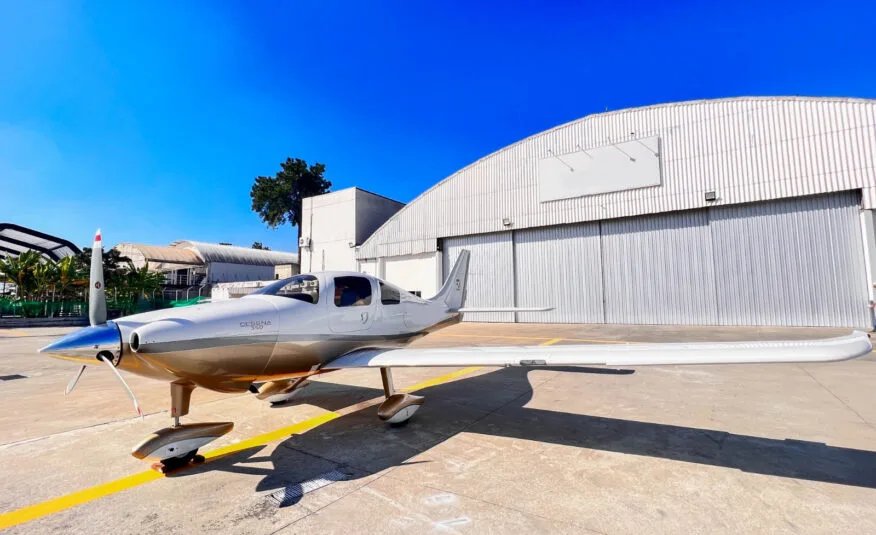
The Cessna 350 Corvalis is a four-seat, low-wing, composite piston aircraft built for personal and business transportation. Its roots are in the Columbia 350, developed by Columbia Aircraft and certified in the early 2000s. Cessna acquired the program in 2007 and marketed the normally aspirated model as the Cessna 350 Corvalis before the line was later folded into the Corvalis and TTx family. It matters in the used market because it combines a certified composite airframe, fixed landing gear, and high cruise performance without the complexity of turbocharging.
Performance & specifications
Power comes from a Continental IO-550-N, a 310 hp, six-cylinder, fuel-injected engine driving a constant-speed propeller. Typical high-speed cruise figures are around 190 knots true airspeed in favorable conditions, with long-range planning commonly discussed around the 1,000 nautical mile class depending on power setting, reserves, and payload. Published service ceiling is 18,000 feet. Useful load varies by equipment and individual aircraft, but many examples are around the 1,000 lb range. The fixed tricycle landing gear reduces mechanical complexity compared with retractable aircraft, while the clean composite airframe supports the model’s strong cruise numbers.
Cabin & avionics
The Cessna 350 Corvalis seats four in a side-by-side front and rear cabin layout, with gull-wing doors and a relatively wide cabin for the class. Buyers should evaluate seating condition, door fit, seals, ventilation, and baggage needs, since these aircraft are often used for serious cross-country flying. Avionics depend on production year and retrofit history. Many Cessna-branded aircraft are equipped with the Garmin G1000 integrated flight deck, typically paired with autopilot capability. Earlier Columbia 350 examples may have Avidyne or mixed Garmin avionics, so equipment should be verified by serial number and logbook records rather than model name alone.
Buying & value
On the used market, the Cessna 350 Corvalis sits between traditional high-performance fixed-gear singles and more complex turbocharged or retractable aircraft. It appeals to buyers who value speed, modern avionics, and composite construction, but who do not need the turbocharged performance of the Cessna 400 Corvalis. Pre-purchase focus should include engine time and cylinder history, propeller status, avionics software and database support, autopilot performance, composite airframe inspections, door and window condition, fuel system condition, and compliance with service bulletins and airworthiness directives. Upgrades often include WAAS capability, ADS-B equipment, engine monitoring enhancements, interior refurbishment, and paint or cosmetic work. Pricing is strongly influenced by avionics configuration, total time, maintenance quality, damage history, and whether the aircraft is a Columbia-built or Cessna-branded example.